ACP Holdings Acquisition Corp. (ACGC) files NT 10-Q, signaling delayed financials
ACGC
ACP Holdings Acquisition Corp. (ACGC) recently notified the market of a delay in filing its quarterly report, submitting an NT 10-Q rather than the expected 10-Q. For micro-cap investors, this is a distinct signal that the company will not meet its regulatory deadline, a common occurrence in the OTC markets but one that always warrants a closer look.
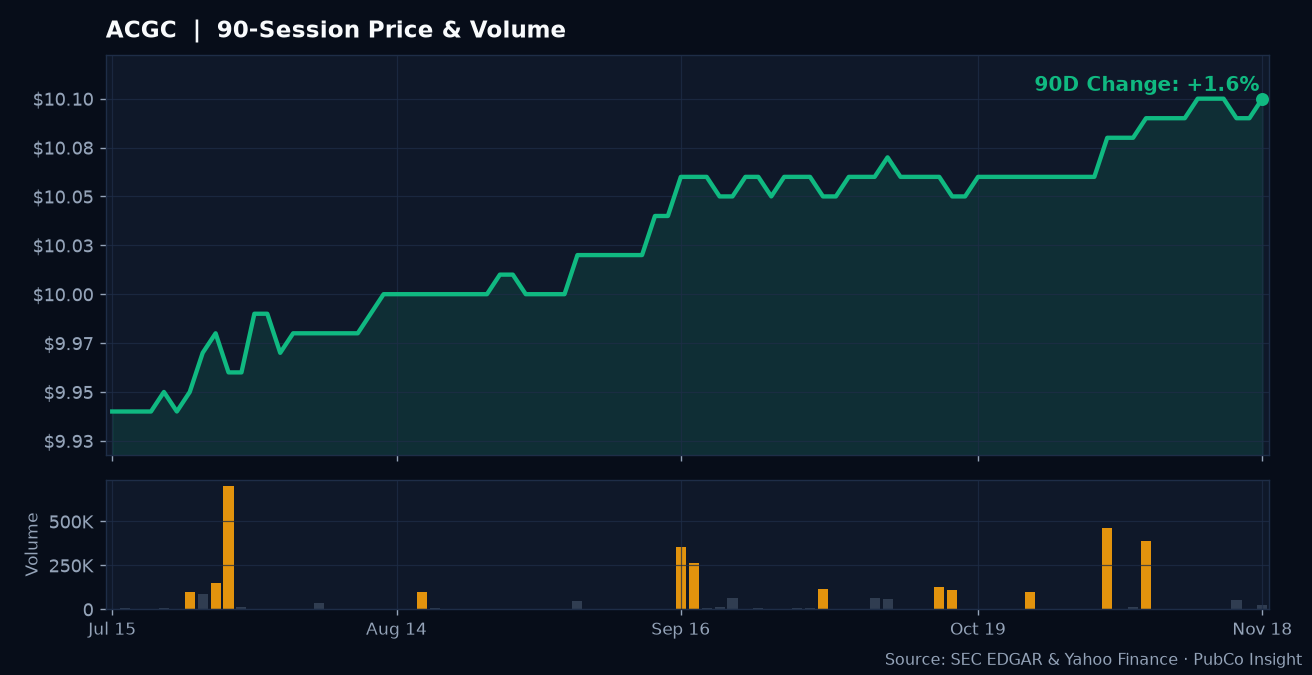
While an NT 10-Q filing provides a brief grace period, it is not a solution. It merely states that the company requires additional time to finalize its financial statements. The market often takes these notices in stride, but a pattern of late filings can erode investor confidence and, in more severe cases, lead to stricter trading limitations or even delisting from certain tiers. This is a basic function of public company compliance, and missing it is a basic function of risk for shareholders.
The subsequent filing of the 10-Q, which did arrive, offers a partial resolution to the immediate delay. However, the initial NT 10-Q remains a data point indicating a potential operational or internal control issue that prevented timely reporting. Investors should consider whether this is an isolated event or part of a broader trend in ACGC's reporting history.
When a company struggles with timely financial reporting, it can obscure the true state of its operations and financial health. For ACP Holdings Acquisition Corp. (ACGC), this means that while the financials are now available, the initial delay itself is a fact pattern. Diligence on the underlying reasons for such delays is crucial for understanding the stability of a micro-cap investment.
Understanding the cadence of financial reporting is a core component of evaluating micro-cap risk. While ACGC eventually delivered its 10-Q, the NT filing serves as a reminder to shareholders to always know what they own, especially when companies signal potential issues with fundamental compliance.