SeaStar Medical (ANEB) Faces Ongoing Dilution Pressure Despite Recent Effectiveness
ANEB
SeaStar Medical Holding Corp. (ANEB) recently made headlines with an S-1 filing becoming effective, a common event in the micro-cap space that often signals a new round of potential share issuance. For a company with a market capitalization around $11 million and over 40 million shares outstanding, understanding the mechanics behind these filings is key to evaluating investment risk. The market often focuses on clinical progress or product potential, but the filings tell a more immediate story about how the company funds its operations.
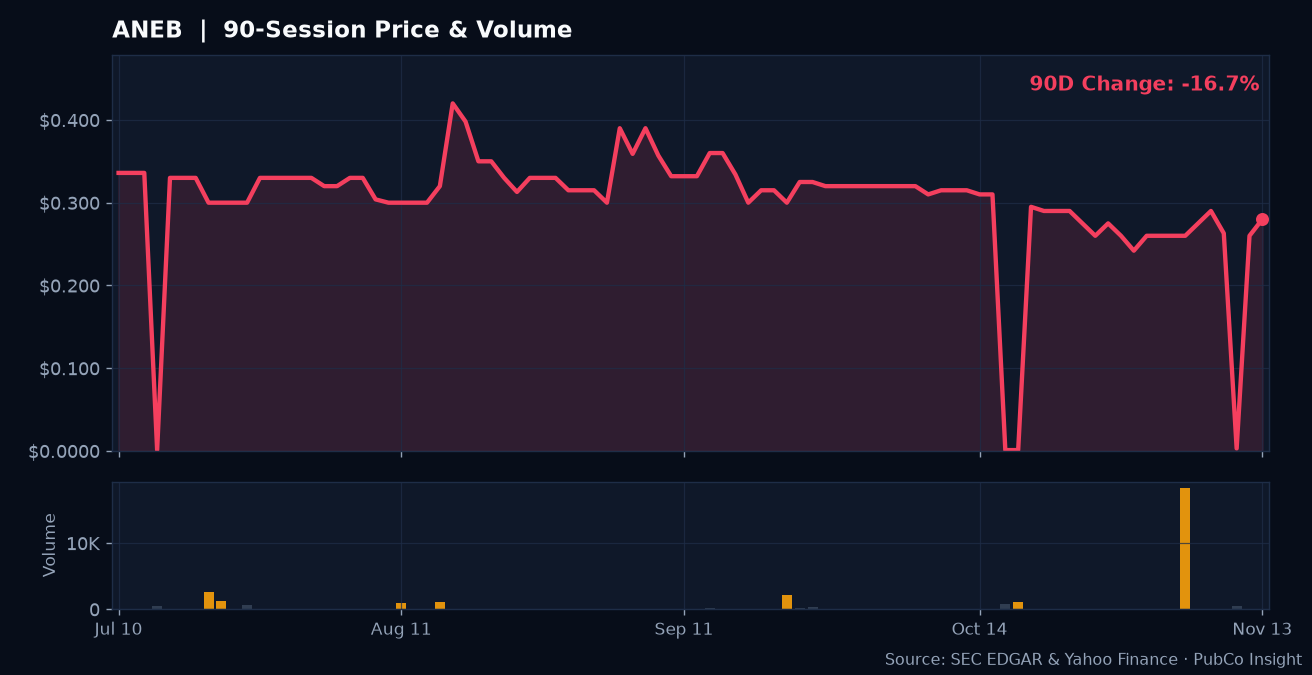
The company's latest 10-Q, filed on November 12, 2026, provides a snapshot of its financial position for the quarter ended September 30, 2026. While the report details operational performance, the concurrent EFFECT filing on November 10, 2026, for a previously filed S-1 registration statement, points to an ongoing need for capital. This isn't a speculative concern; it's a structural reality for many development-stage biotech firms. An effective S-1 means the company now has the regulatory green light to issue new shares, which, if exercised, will likely increase the share count further.
Shareholders should be particularly attentive to the implications of such filings. Each new share issued, particularly through at-the-market offerings or similar financing mechanisms, adds to the total outstanding shares. This dilutes the ownership percentage of existing shareholders and can exert downward pressure on the stock price, even if the capital raised is essential for ongoing research and development. It's a classic micro-cap trade-off: funding operations versus maintaining share value.
For SeaStar Medical, the dilution risk is a primary consideration, underscored by the recent effectiveness of its S-1. While the exact timing and terms of any future share issuances are not always immediately clear, the regulatory framework is now in place. Investors who focus solely on press releases or clinical trial updates without examining the financing structure risk overlooking a fundamental aspect of their investment.
Ultimately, investing in micro-cap biotech requires a thorough understanding of both the science and the financial plumbing. For SeaStar Medical Holding Corp., the recent filings suggest that capital raises, and the accompanying potential for dilution, remain a significant operational reality. Know what you own, and that includes understanding how a company keeps the lights on and the research moving forward.