American Rebel Holdings Inc. (AREB): A flurry of 8-Ks and the persistent question of shareholder value
AREB
American Rebel Holdings Inc. (AREB) has been particularly busy on the SEC filing front, with a series of 8-K reports over recent months detailing a consistent pattern of debt-to-equity conversions and new financing arrangements. While these filings indicate ongoing efforts to manage the company's capital structure, they also highlight a persistent risk of dilution for existing common shareholders.
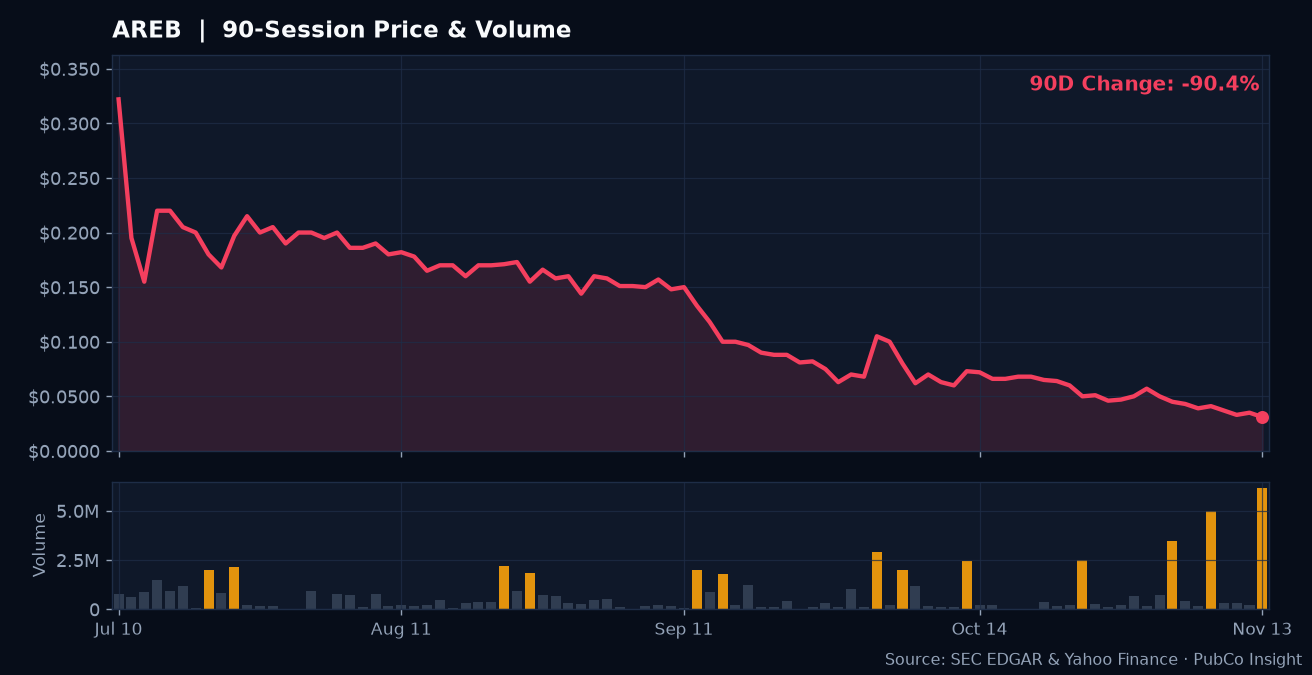
The 8-K filed on November 10, 2026, for example, disclosed a material agreement involving the conversion of outstanding debt into common stock. This follows similar disclosures on October 30, 2026, and October 14, 2026, where the company outlined further debt restructurings and the issuance of common stock or warrants as part of these agreements. Each of these events, detailed in Item 3.02 (Unregistered Sales of Equity Securities) within the filings, adds to the potential pool of shares that could enter the market.
These transactions are not isolated incidents. Reviewing the company's recent filings reveals a recurring theme: new debt or convertible notes are issued, and then, often shortly thereafter, these liabilities are converted into equity or become convertible at terms that can significantly increase the outstanding share count. For retail investors, this frequent resort to equity-linked financing mechanisms means that the ownership stake represented by their shares could shrink without a corresponding increase in company value or assets.
The mechanics are straightforward: more shares in circulation, without a proportional increase in the company's underlying value, typically means each share represents a smaller slice of the pie. While managing debt is a necessary corporate function, the consistent use of equity as a primary tool for this management, as seen in AREB's recent 8-Ks, merits close attention from shareholders. Investors interested in understanding the full scope of this activity should review the company's filings, particularly those under Item 3.02, to track the issuance of new shares and convertible securities. This pattern suggests a dilution risk that warrants ongoing scrutiny.
Ultimately, the continuous cycle of debt conversions and new equity issuances, while addressing immediate financial obligations, places a significant burden on the common shareholder. Understanding these frequent capital structure adjustments is crucial for any investor holding American Rebel Holdings Inc. stock. Knowing what the filings say, rather than what the market buzz might suggest, is the first step in truly understanding your investment.