Golden Minerals Co (AUMN): Fresh Capital, Familiar Dilution Risk
AUMN
Golden Minerals Co. (AUMN) recently announced new financing, a move that often sparks investor interest. However, a closer look at the November 10, 2026, 8-K filing reveals the kind of capital raise that typically comes with an unglamorous reality for existing shareholders: fresh capital often means fresh dilution. The company entered into a securities purchase agreement, issuing both shares of common stock and warrants, a common structure for micro-cap financings that merits careful attention.
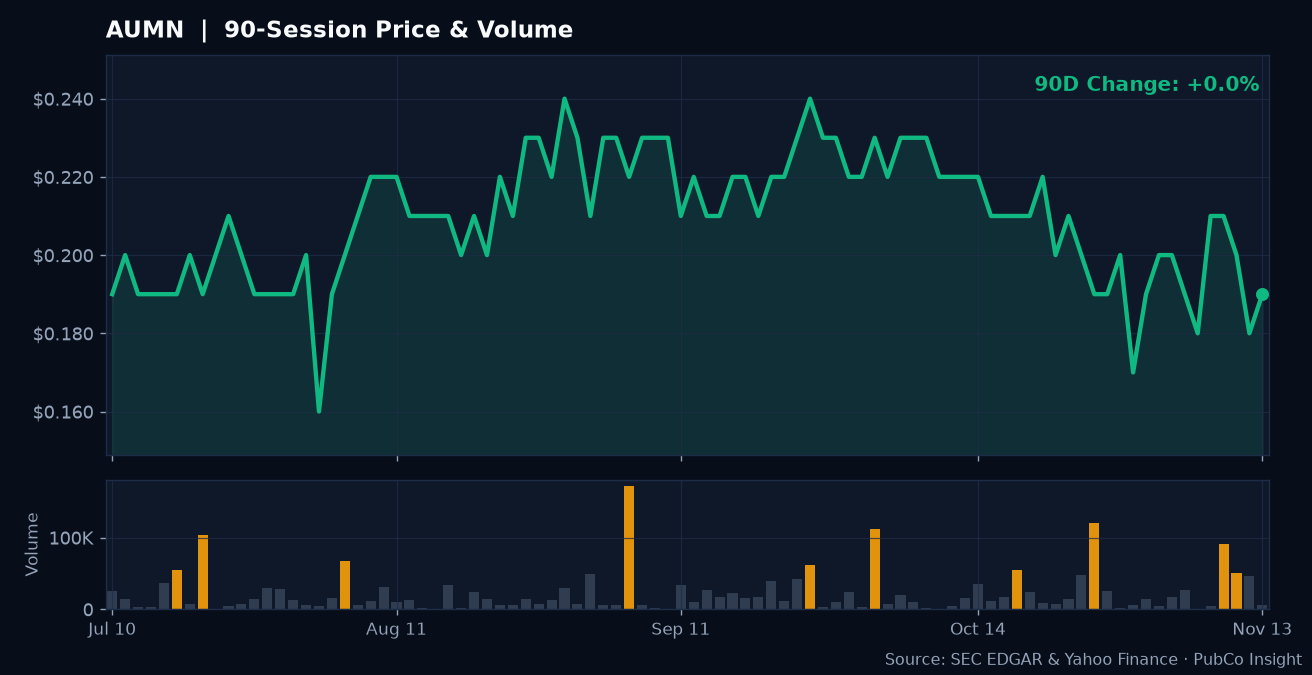
The 8-K specifically details the issuance of common stock and warrants. While the immediate capital infusion can provide operational runway, the warrants represent a future claim on shares that, if exercised, will increase the outstanding share count. This mechanic directly impacts the per-share value of existing holdings, making it crucial for investors to understand the full scope of potential dilution. It is a classic example of how capital can be raised at the expense of existing ownership percentages.
Further, the November 13, 2026, 10-Q filing provides the latest financial snapshot, painting the broader context for why such financings are necessary. Investors should always cross-reference these documents; an 8-K detailing a financing often follows a period of significant cash burn or operational challenges highlighted in the quarterly report. Understanding the company's financial health helps contextualize the terms of any new capital raise.
The combination of new share issuance and outstanding warrants creates a structural risk of dilution. While the immediate share count stands at 18.89 million, the exercise of these warrants could significantly increase that figure. This isn't an allegation of poor management, but rather a mechanical reality of how these financing structures play out in the market. The impact of warrant exercises can be particularly pronounced in companies with smaller market capitalizations like Golden Minerals Co.
For retail investors, the takeaway is straightforward: always read the specifics of a financing. A headline announcing new capital is only half the story. The other half lies in the details of the agreement, particularly regarding new share issuances and warrants, which are clear signals of potential dilution. Knowing what you own means understanding not just the company's prospects, but also the structural risks embedded in its capital structure.