Nuo Therapeutics (AURX) Debt Conversion Raises Shareholder Dilution Questions
AURX
Nuo Therapeutics, Inc. (AURX) shares trade at a market capitalization of roughly $52 million, but a recent filing suggests investors should look closely at how that value is being maintained. An October 2026 8-K filing details a material agreement involving the conversion of outstanding debt into common stock. While debt conversion can clear liabilities from the balance sheet, it also has direct implications for the existing shareholder base.
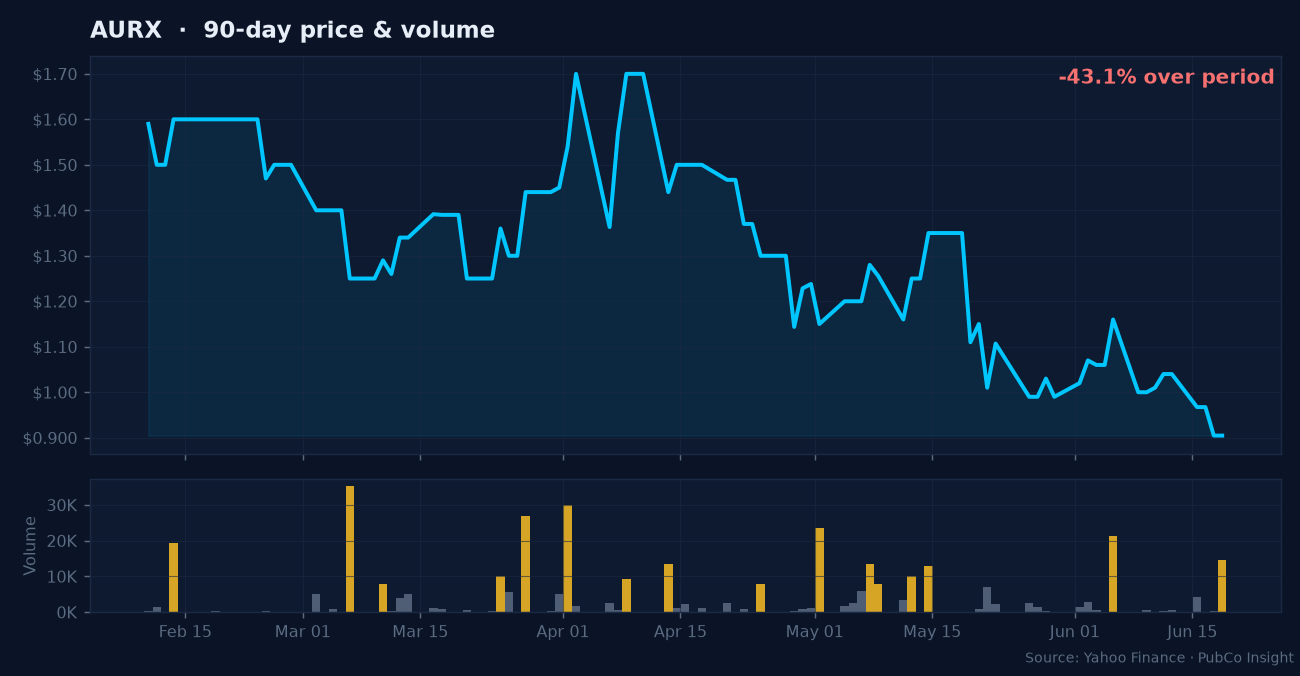
Specifically, Item 1.01 of the 8-K, filed October 6, 2026, describes a transaction where the company issued shares in exchange for debt. This mechanism increases the total number of shares outstanding without necessarily adding new capital for operations, effectively spreading the company's existing value across a larger pool of shares. For current shareholders, this means their percentage ownership of the company is reduced, or diluted, with each such conversion.
The mechanics of this are straightforward: more shares in the market mean each existing share represents a smaller slice of the company. In the case of AURX, with approximately 48.43 million shares already outstanding, adding more through debt conversion could incrementally diminish per-share metrics, from earnings to book value. This is a common method for microcap companies to manage debt without incurring cash outlays, but it shifts the burden of repayment to the equity base.
The latest 10-Q, filed November 13, 2026, for the period ending September 30, 2026, provides further context on the company's financial position, though it does not fully pre-date the October 8-K's impact. Investors reviewing AURX should consider how these financing activities, particularly debt-to-equity conversions, factor into the broader financial picture and the potential for ongoing dilution. For more on this topic, see PubCo Insight's dilution risk tools.
Understanding the interplay between debt management and equity structure is critical for microcap investors. While a company may present a cleaner balance sheet after such a conversion, the cost is borne by existing shareholders through a larger share count. It is a trade-off that demands attention to the filings, rather than just the headline.
For retail investors, recognizing these patterns in the filings is key to knowing what you own. Nuo Therapeutics' recent actions highlight the importance of tracking share count and financing activities, as they often have a more direct impact on per-share value than many other corporate events.