Bioadaptives, Inc. (BDPT): New Agreements, Old Dilution Risks
BDPT
Bioadaptives, Inc. (BDPT) recently announced new material agreements via an 8-K filing on November 4, 2026. While such announcements can sometimes generate market interest, a closer look at the filings reveals a familiar pattern of financing that has historically led to substantial shareholder dilution. The company's latest 10-Q, filed August 19, 2026, continues to flag the mechanisms contributing to this ongoing risk, suggesting that any perceived upside from new agreements must be weighed against the persistent overhang of capital raises.
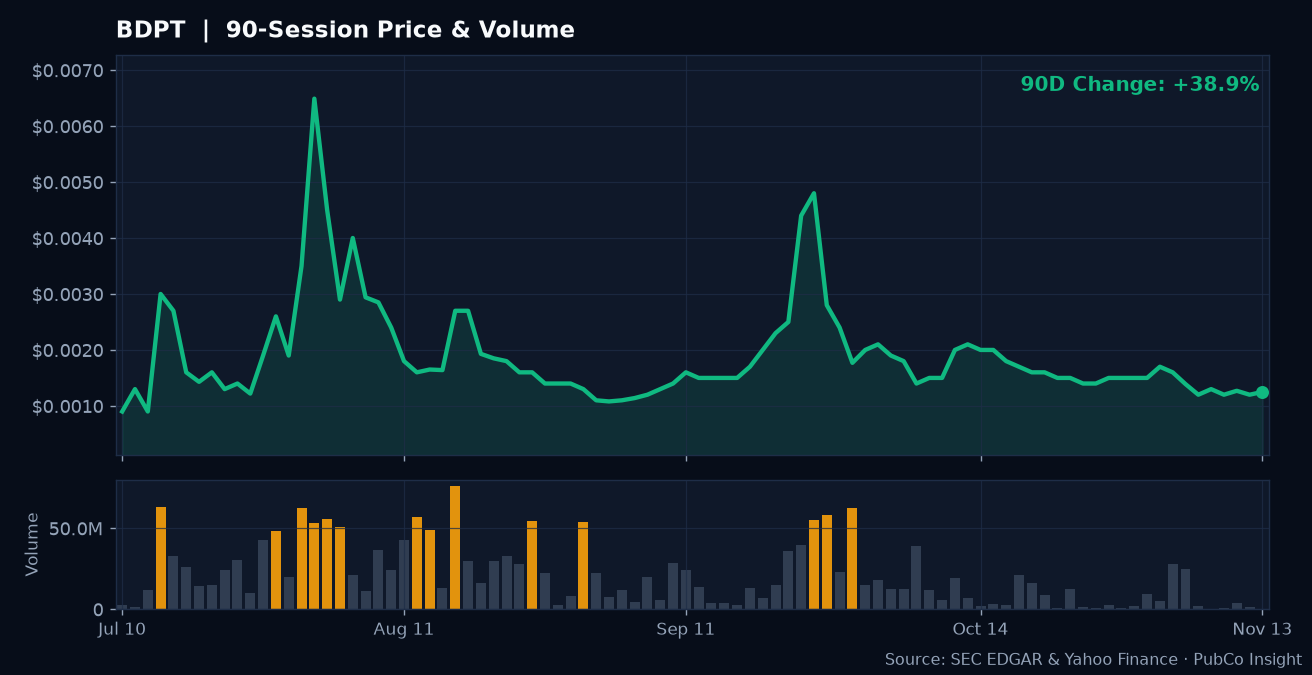
The November 8-K specifically mentions new material agreements and a related issuance of unregistered securities under Item 3.02. This is often a signal that new capital has been secured, but the method of financing bears scrutiny. Issuing unregistered securities frequently involves convertible notes or similar instruments that, upon conversion, add to the outstanding share count. For BDPT, with a reported 196.93 million shares outstanding and a micro-cap valuation, even modest conversions can significantly shift per-share metrics.
Reviewing the company's financial history, particularly in the context of its August 19, 2026 10-Q filing, shows a pattern of relying on such financing to sustain operations. This approach, while providing necessary capital, consistently expands the share base. Investors should consider how these repeated capital raises impact their ownership percentage and the potential for future per-share value erosion. The company's delayed 10-Q filing, preceded by an NT 10-Q on August 14, 2026, also suggests operational challenges that often correlate with the need for ongoing external financing.
The structural risk for shareholders lies in the mechanics of these dilutive financings. Each new issuance, especially when tied to material agreements that may require significant funding, can create a fresh wave of shares entering the market. This constant supply can depress share price appreciation, even if the underlying business sees incremental improvements. For a detailed look at how these mechanisms work, investors can consult our dilution risk tool.
For Bioadaptives, Inc., the message from the filings remains consistent: new agreements may bring headlines, but the method of funding those agreements often involves increasing the share count. Retail investors should carefully consider the implications of these financing activities on their investment, understanding that the value of any new business initiatives must be substantial enough to offset the persistent dilutive effects.