BIO Key International (BKYI): A Small Float, a Large Shelf, and the Mechanics of Dilution
BKYI
BIO Key International (BKYI) has a market capitalization just over $4 million, supported by a reported 1.44 million shares outstanding. This small float often attracts attention, but a look at the company's recent S-1/A filings tells a different story about future share count. While the current public float is modest, the active registration statements indicate a capacity for a much larger number of shares to enter the market.
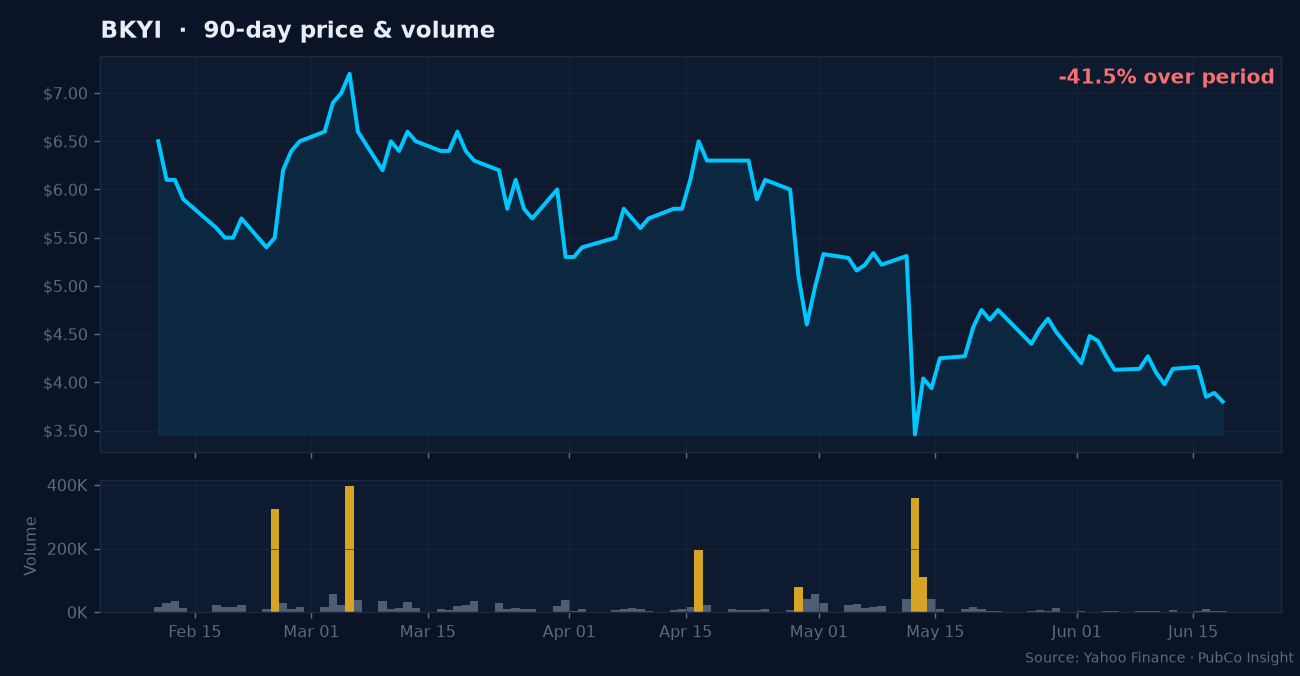
Specifically, the S-1/A filed on November 20, 2026, and an earlier one on October 30, 2026, serve as a standing offer for BIO Key International to issue additional shares. These aren't just theoretical possibilities; they are the financial groundwork laid for future capital raises. For a company of BKYI's size, with its current market valuation, such a significant shelf registration can represent a substantial overhang on the existing share structure. The mechanics are straightforward: the company can, at its discretion, issue new shares into the market, increasing the total share count and potentially diluting the ownership stake of current shareholders.
This isn't to say that new shares will be issued immediately or all at once. However, the presence of these active S-1/A filings means the company has the legal framework in place to do so. Investors who focus solely on the current outstanding share count without considering the potential for future issuance from these registrations may be operating with an incomplete picture. The immediate impact of a small float can be appealing, but the long-term implications of an active shelf registration can fundamentally alter the investment thesis.
The company's latest 10-Q, filed on November 13, 2026, provides the most recent operational and financial details, which should be considered alongside the potential for dilution. While the 10-Q describes past performance, the S-1/A filings describe future financing capacity. Given the company's micro-cap status, the ability to raise capital through equity offerings is a common strategy, but it comes with a direct cost to existing shareholders through dilution.
For retail investors, understanding the implications of these filings is crucial. A small float can lead to volatility, but a large, active shelf registration can lead to a steady erosion of per-share value as more shares are introduced. It's a reminder that a company's share count isn't static, particularly for micro-caps with active financing documents on file. Always consider the full picture of potential dilution risk when evaluating such opportunities.
Get emailed the day $BKYI files with the SEC.
Receive a source-linked alert when BIO Key International Inc. posts a new 8-K, 10-Q, 10-K or S-1 on EDGAR, plus our Thursday flags and down-market holdouts briefing. Free, no buy or sell pitches.