American Battery Materials, Inc. (BLTH): S-1/A and Recent 8-Ks Point to Potential Shareholder Dilution
BLTH
American Battery Materials, Inc. (BLTH) has been busy on the regulatory front, but not necessarily in ways that suggest immediate upside for existing shareholders. While the market capitalization sits at approximately $13 million, recent filings, particularly an S-1/A from August and subsequent 8-Ks, outline a clear path for new shares to enter the market, potentially impacting the current share structure.
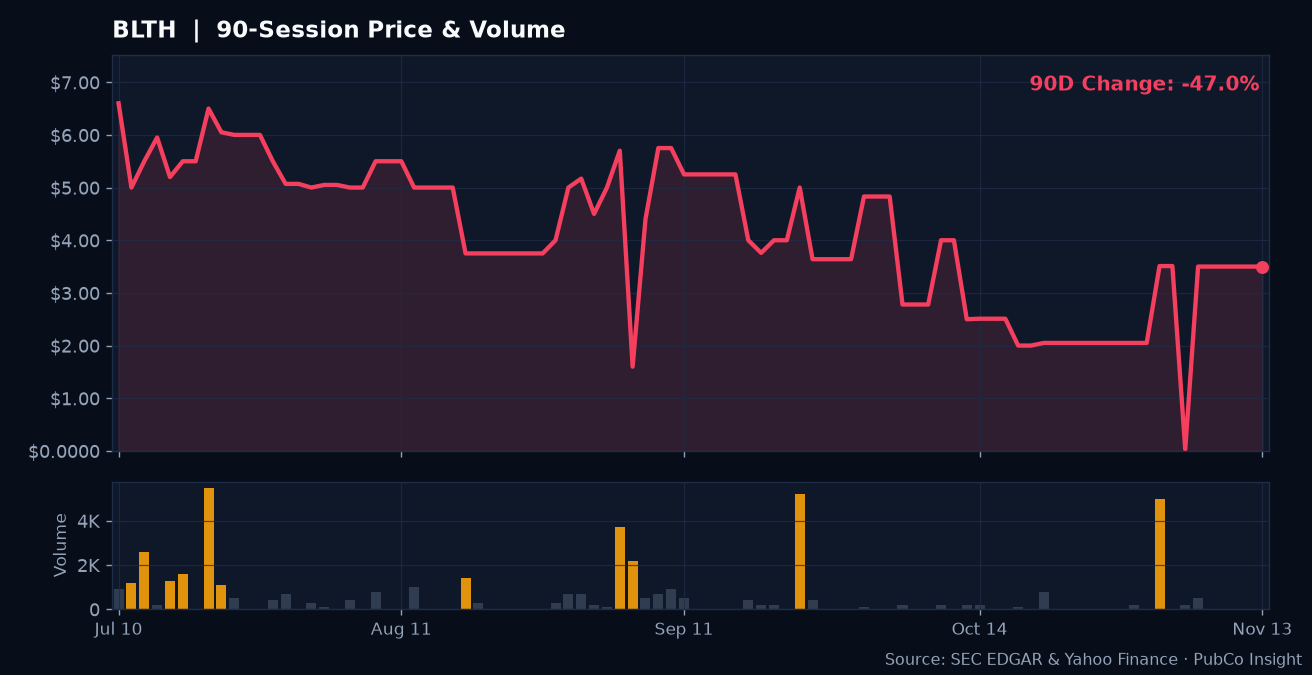
The S-1/A filing on August 11, 2026, is the primary mechanism here. These filings are designed to register securities for public sale, and in BLTH's case, it indicates the company's intent to raise capital. While the specifics of pricing and volume often emerge later, the mere presence of an S-1/A signals that the company is preparing to issue shares. This is not unusual for micro-cap companies, but it is a critical point for investors to understand: new shares mean a larger denominator in per-share calculations, and often, downward pressure on individual share value.
Adding to this picture are the 8-K filings. An October 13, 2026, 8-K specifically noted Items 1.01 and 3.02, indicating material agreements and unregistered sales of equity securities. Similarly, an August 25, 2026, 8-K also reported a material agreement under Item 1.01. These filings suggest the company is actively engaging in financing activities that could involve the issuance of shares or convertible instruments. The combination of an active S-1/A and recent financing agreements points to a structural shift in the share count.
For those tracking BLTH, the latest 10-Q filed on November 12, 2026, provides the most current snapshot of the company's financial health, which is always crucial context for any financing activity. However, the forward-looking risk comes from the potential for the S-1/A to be fully utilized. Investors interested in the mechanics of how these offerings can impact share value should review our dilution risk resources.
The current reported shares outstanding for American Battery Materials, Inc. are approximately 3.79 million, giving it a relatively tight float. However, the explicit registration of securities through an S-1/A and the ongoing material agreements related to equity sales suggest this number could expand. A larger share count dilutes the ownership stake of existing shareholders, all else being equal.
Understanding the interplay between these filings is key. It's not about predicting a specific price movement, but recognizing the structural risks embedded in the company's financing strategy. As American Battery Materials, Inc. pursues its objectives, its reliance on equity financing, as signaled by these filings, is a fundamental consideration for anyone holding or considering its shares. Know what you own, and understand how the company plans to fund its operations.