American Battery Materials (BLTH): Frequent Capital Raises Signal Ongoing Dilution Risk
BLTH
American Battery Materials, Inc. (BLTH) has been busy in recent months, but not with operational breakthroughs. Instead, the company's filings paint a clear picture of frequent capital raises, a common characteristic of micro-cap firms attempting to fund operations or growth through the issuance of new securities. For existing shareholders, this pattern often translates directly into dilution, as each new financing round adds more shares to the outstanding count.
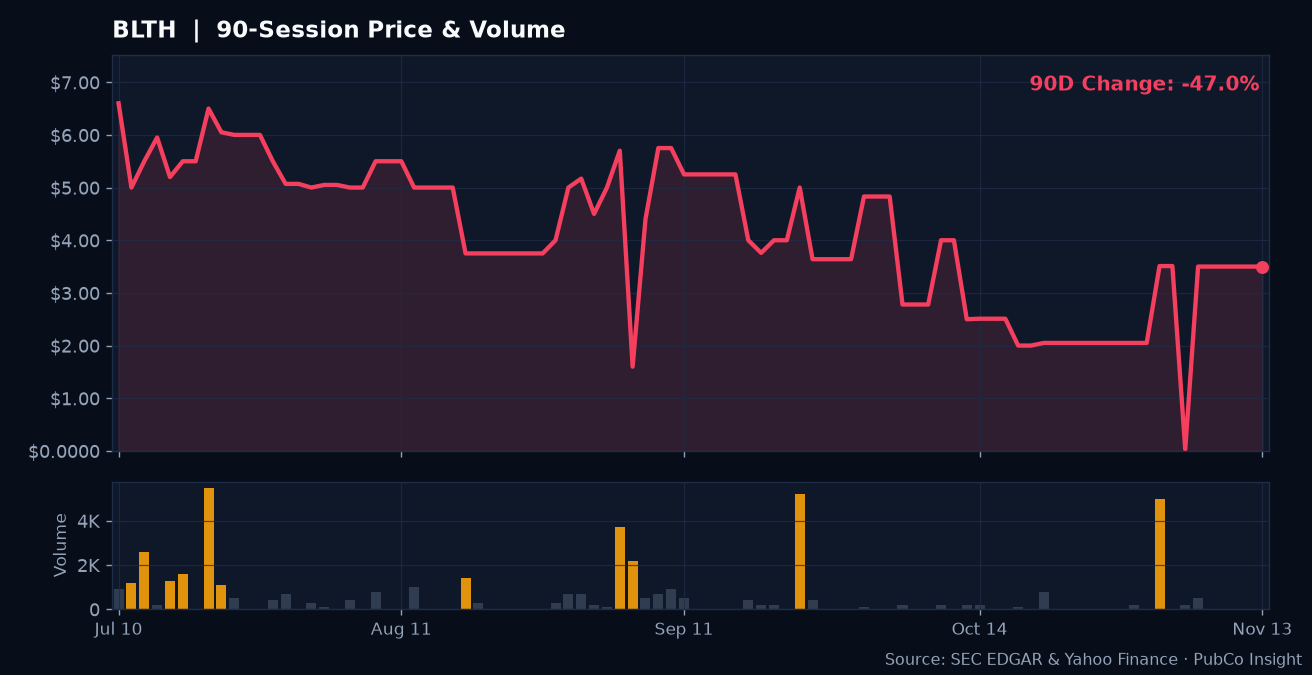
A review of BLTH's recent 8-K filings shows a consistent drumbeat of financing activity. On October 13, 2026, the company filed an 8-K disclosing a material agreement and the issuance of securities under Item 3.02. This followed another 8-K on August 25, 2026, also detailing a material agreement. These are not isolated incidents; they represent a recurring need for external funding, which is frequently met by issuing convertible notes or other instruments that can convert into common stock.
The implications for retail investors are straightforward: each time new shares are issued to fund operations, the ownership stake of existing shareholders is proportionally reduced. This is a fundamental mechanic of dilution, where the company's value, if any, is spread across an ever-larger number of shares. The company's S-1/A filing from August 11, 2026, further underscores the potential for future share issuances, as such registration statements are designed to facilitate the sale of securities.
While the company's website mentions its focus on battery materials, the regulatory filings focus on the financial engineering required to keep the lights on. The 10-Q filed on November 12, 2026, provides the most recent snapshot of the company's financial health, and it is in these reports that the true cost of frequent capital raises-related to interest expenses or future share conversions-becomes apparent. Investors interested in understanding the full scope of potential dilution should examine these filings closely. For more information on how these financings impact shareholders, consider reviewing PubCo Insight's dilution risk resources.
Ultimately, the story of American Battery Materials, Inc. as told by its SEC filings is one of a company actively engaged in raising capital. While this is a necessary function for many early-stage or micro-cap ventures, the consistent nature of these financings suggests that dilution remains a significant, ongoing risk for BLTH shareholders. Knowing what you own means understanding how new capital is acquired and what that means for your piece of the pie.
Get emailed the day $BLTH files with the SEC.
Receive a source-linked alert when American Battery Materials, Inc. posts a new 8-K, 10-Q, 10-K or S-1 on EDGAR, plus our Thursday flags and down-market holdouts briefing. Free, no buy or sell pitches.