Bravo Multinational Inc. (BRVO) Notifies Late Q3 Filing Amidst Ongoing Operational Questions
BRVO
Bravo Multinational Inc. (BRVO) recently filed an NT 10-Q, signaling that its third-quarter report will not be filed on time. This notice arrives after an active period for the company, which included an 8-K filing detailing a change of control and new material agreements. For a micro-cap with a market capitalization under $1 million, such developments warrant a closer look, especially when the operational picture remains somewhat opaque.
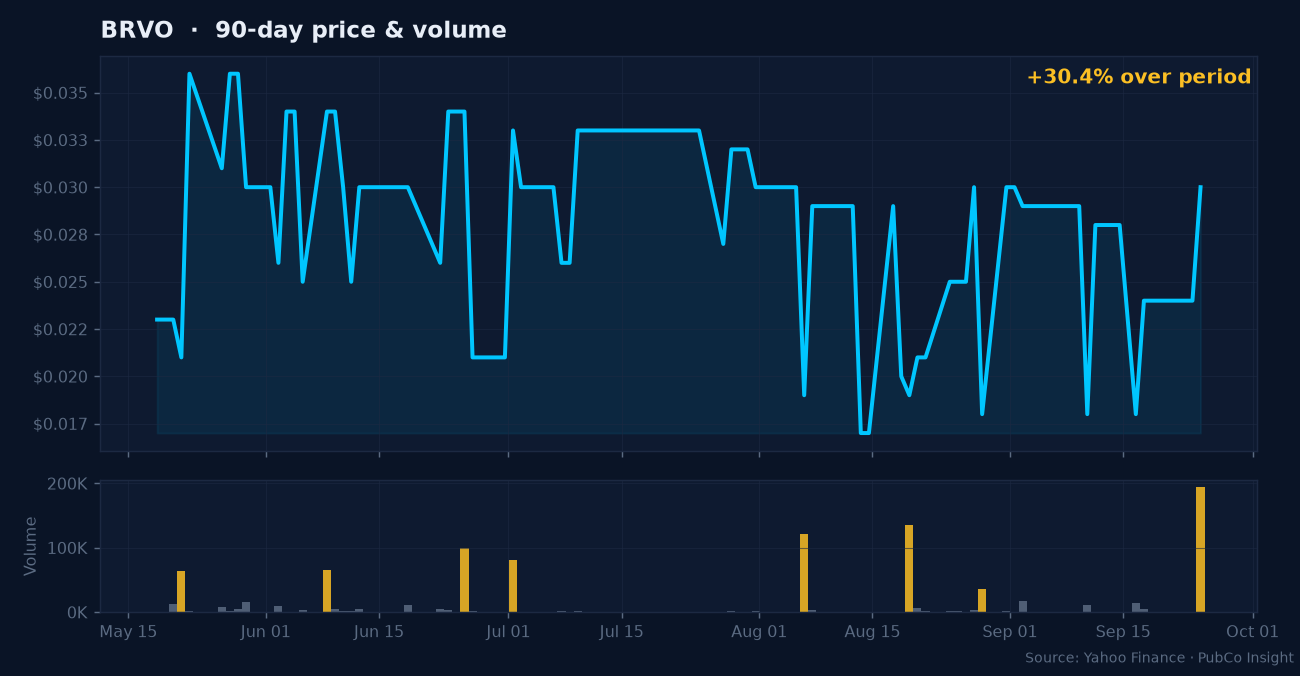
The September 24, 2026, 8-K filing is particularly noteworthy, reporting a change of control under Item 5.01 and new material agreements under Item 1.01. While these events can sometimes signal a strategic shift, the subsequent NT 10-Q filing points to persistent operational challenges. The company's most recent 10-Q, filed on August 19, 2026, for the period ending June 30, 2026, explicitly included a 'going concern' disclosure. This is a standard but serious flag, indicating that management has substantial doubt about the company's ability to continue as a going concern for the next twelve months.
A going concern warning, particularly in a micro-cap context, often means the company is struggling with liquidity and may need to raise additional capital. Such capital raises, if they occur, frequently involve the issuance of new shares, which can lead to dilution for existing shareholders. Given the company's current market cap and the stated going concern, the risk of future dilution remains a material consideration for anyone holding BRVO shares. For more information on how such events can impact share value, investors may wish to review our dilution risk resources.
Furthermore, the company's most recent financial statements, as of June 30, 2026, did not paint a picture of robust operations. The SIC description for Bravo Multinational Inc. is 'Services-Miscellaneous Amusement & Recreation,' yet recent filings offer little insight into current revenue-generating activities or a clear path to profitability. The lack of a timely Q3 report exacerbates this information deficit, leaving investors with an incomplete understanding of the company's financial health and operational progress post-change of control.
For retail investors, the combination of a going concern warning, a change of control without clear operational detail, and a late filing should prompt careful consideration. Understanding what you own means digging into the limited public data available and acknowledging the inherent risks in companies facing these types of challenges. The market often moves on narratives, but the filings tell a more grounded story of a company navigating significant operational and financial uncertainty.