BioStem Technologies, Inc. (BSEM): A Look Beyond the Latest Quarter
BSEM
BioStem Technologies, Inc. (BSEM) filed its latest 10-Q on November 12, 2026, alongside an 8-K reporting earnings. While an earnings release can generate market attention, a closer look at the filings reveals a more complex picture, particularly regarding the company's capital structure and the potential for shareholder dilution. Investors often focus on top-line numbers, but the mechanics of how a micro-cap company funds itself are equally critical.
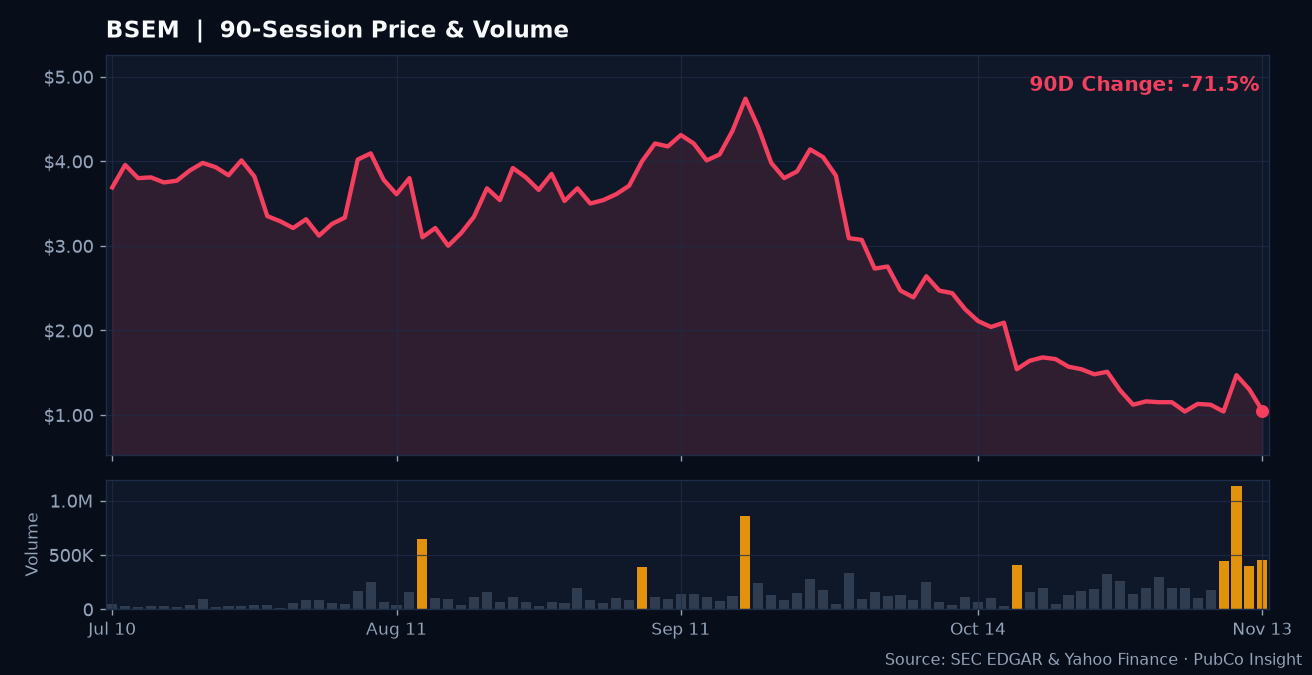
The company's recent filings, including multiple Schedule 13G submissions around the same period, suggest active participation by institutional holders. However, this doesn't automatically translate to stability for common shareholders. For a company with a market capitalization of approximately $24 million, the ability to raise capital often involves issuing new shares, a common practice that can lead to dilution for existing investors. The raw count of S-filings and 424B prospectuses, as indicated by a dilution risk score of 41, points to a pattern of capital raises through equity. This means that while the company may secure necessary funding, each new share issued can diminish the ownership stake and future earnings per share for current shareholders.
Reviewing the balance sheet in the 10-Q is essential. For many micro-cap companies, a going concern warning is a familiar sight, but even without one, the cash position and burn rate dictate the need for future financing. Every capital raise, especially in the OTC market, carries the potential for terms that favor new investors over existing ones, whether through discounted share prices, warrants, or convertible notes. These mechanisms can create a persistent overhang on the stock price.
The details within the 10-Q, such as changes in outstanding shares or the terms of recent debt or equity financings, provide the clearest signal of these risks. Without delving into specific numbers or events not explicitly provided in the data, the general principle holds: frequent capital market activity, particularly involving the issuance of new securities, is a critical point of analysis for any investor considering BioStem Technologies, Inc.
Ultimately, understanding BioStem Technologies, Inc. requires looking beyond just the headline numbers of an earnings report. The underlying financial documents detail the structural reality of the company's funding and its impact on shareholders. For retail investors, this means knowing that a company's growth story, however compelling, is always subject to the financial realities outlined in its filings. Every share counts, and understanding how new ones are created is part of knowing what you own.