Chain Bridge I (CBRRF): SPAC's Extended Timeline and Redemption Risks
CBRRF
Chain Bridge I (CBRRF) recently pushed out its deadline to complete a business combination, a common but often unglamorous reality for special purpose acquisition companies, or SPACs. The November 6, 2026, 8-K filing confirms the extension, a detail that, while standard, underscores the continued search for a suitable target and the associated timeline pressures.
For SPACs like Chain Bridge I, these extensions are typically accompanied by the right for shareholders to redeem their shares. The DEF 14A filed on October 2, 2026, and the PRE 14A on September 17, 2026, laid out the proposals for this extension. While management gains more time, the risk for existing shareholders is that significant redemptions can decrease the cash held in trust, potentially impacting the size and quality of any future acquisition, or even leaving the SPAC with insufficient funds to close a deal.
The company's 10-Q filed on August 14, 2026, provides a snapshot of its financial position prior to these extension votes. These quarterly reports are crucial for understanding the cash available in the trust account, the primary asset of a SPAC, and for assessing the potential impact of redemptions on that pool of capital. A high rate of redemptions can leave a SPAC with a much smaller cash balance than initially anticipated by investors.
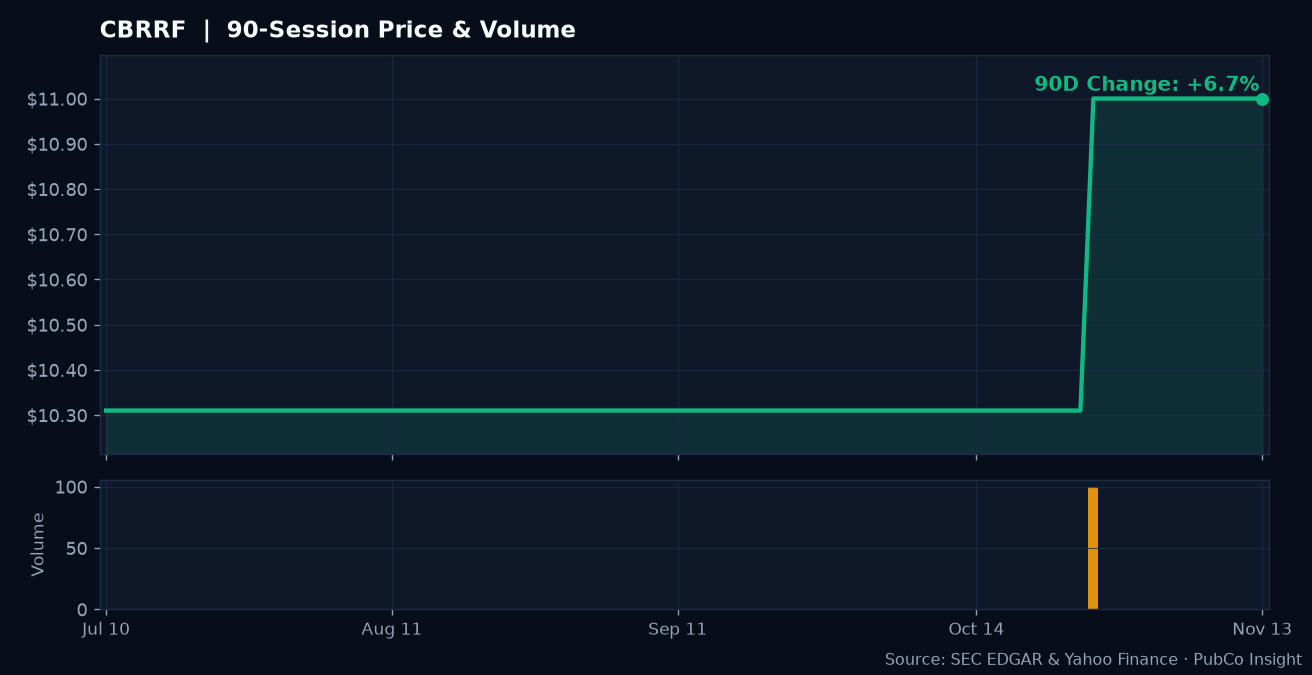
The current market capitalization of Chain Bridge I stands at approximately $63 million with 5.81 million shares outstanding. This valuation, in the context of a blank check company still seeking a target, reflects market expectations and the inherent uncertainty. Investors in SPACs are essentially betting on management's ability to identify and successfully merge with a viable operating business.
The structural mechanics of SPACs mean that repeated extensions, while buying time, can also lead to increased shareholder turnover and a shrinking capital base available for the eventual de-SPAC transaction. Understanding the terms of these extensions and the potential for redemptions is key to assessing the true value proposition of a blank check company. For more on how these mechanisms impact shareholder value, see our dilution risk tool.
As Chain Bridge I continues its search, investors should remain focused on the details in the filings, particularly around redemptions and the trust account balance, rather than relying solely on the promise of a future deal. Knowing what you own means understanding the timeline and the financial realities of these blank check structures.