Inovio Pharmaceuticals (INO): A Closer Look at Recent Filings
INO
Inovio Pharmaceuticals, Inc. (INO) recently saw a 424B5 filing hit the SEC Edgar database on November 6, 2026, a signal that often precedes or accompanies capital-raising efforts. For retail investors in the biotech space, understanding these filings is crucial, as they outline the mechanics of how a company intends to raise funds, frequently through the issuance of new shares.
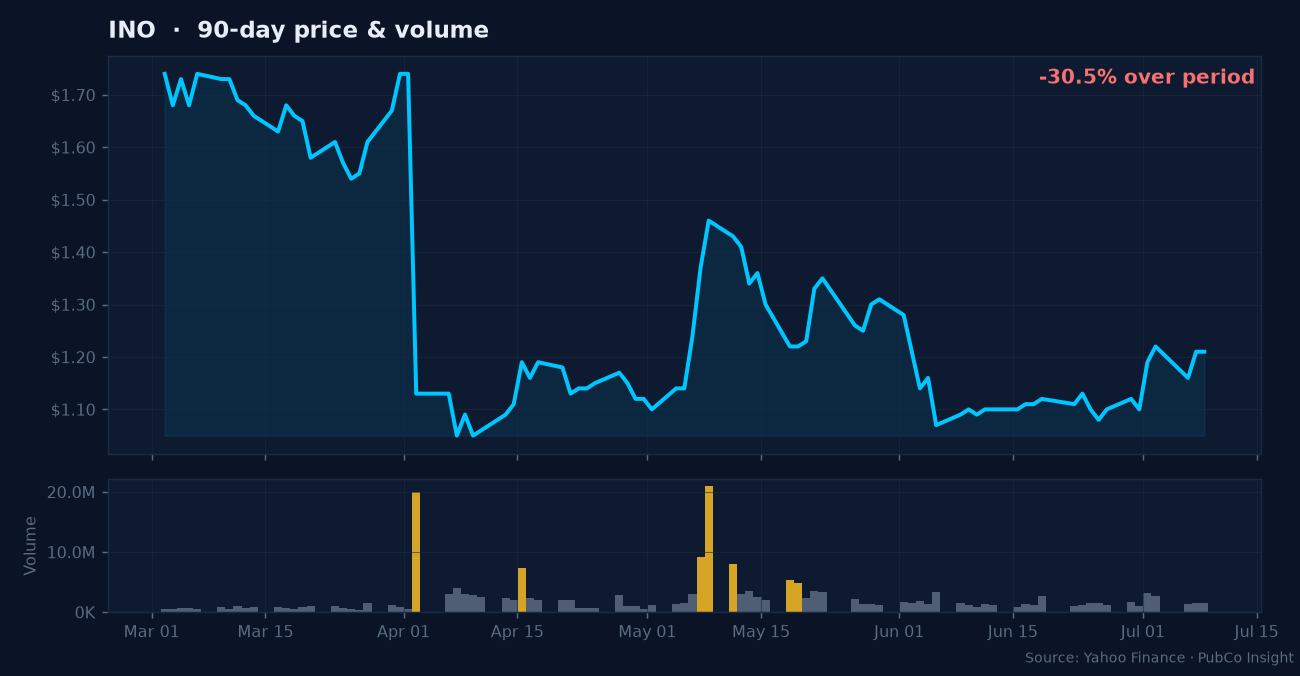
A 424B5 filing is a prospectus supplement that details the terms of a securities offering. In Inovio's case, this type of filing suggests the company is actively utilizing or preparing to utilize its existing shelf registration statement to sell more securities. While necessary for funding operations and pipeline development in a capital-intensive sector like biotech, such offerings inherently carry a risk of dilution for existing shareholders, as the ownership pie is sliced into more pieces.
The company's latest 10-Q, filed November 10, 2026, for the period ending September 30, 2026, provides the most recent financial snapshot. While not directly detailing the use of proceeds from the specific 424B5, it offers context for the company's financial position and ongoing cash burn, which often necessitates these capital raises. Biotech firms, particularly those without significant revenue from approved products, frequently rely on external financing to sustain research and development.
Recent 8-K filings on November 9 and November 10, 2026, also point to material agreements and earnings releases, respectively. These updates, combined with the 424B5, paint a picture of a company navigating its operational and financial needs. Investors should consider how these various filings interrelate, particularly the potential for ongoing equity raises to impact per-share metrics. For a deeper dive into how these mechanisms work, investors can consult our dilution risk resources.
Ultimately, Inovio Pharmaceuticals, Inc., like many in its sector, faces the constant challenge of funding innovation. While capital raises are a standard part of that process, the frequency and size of these offerings are key factors for shareholders to monitor. Knowing what you own means understanding not just the science, but also the financial engineering required to bring it to fruition.