iQSTEL Inc (IQST) Looks to Convert Debt After Q2 Loss
IQST
iQSTEL Inc. (IQST) recently disclosed a Q2 net loss in its August 18, 2026 10-Q filing, followed just over a month later by an 8-K detailing a debt conversion agreement. While the company operates in the telecom sector, the financial maneuvering around its debt warrants close attention from retail investors, particularly given the potential for share dilution.
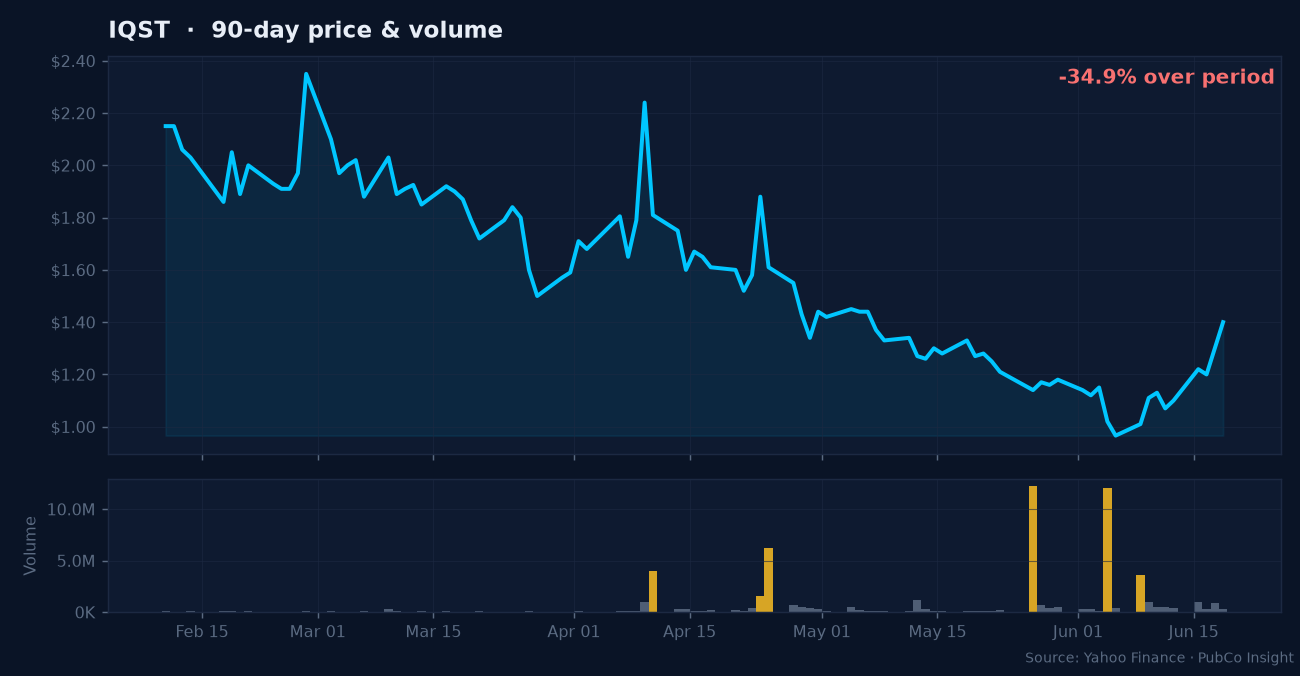
The September 28, 2026 8-K outlines a material agreement where outstanding debt will be converted into common stock. This kind of transaction is a frequent feature in the micro-cap space and, while it can provide a company with immediate financial relief, it often comes at the cost of existing shareholders through an expanded share count. It is a classic financing move that can put downward pressure on per-share value.
Reviewing the August 18 10-Q for the period ending June 30, 2026, iQSTEL reported a net loss. This financial performance context helps frame the subsequent debt conversion as a response to ongoing operational needs rather than a strategic expansion from a position of strength. The company also filed an NT 10-Q on August 14, 2026, indicating a delay in filing its quarterly report, which was then followed by the 10-Q and a 10-Q/A. Timeliness in filings is a basic expectation for public companies.
For those tracking potential dilution risk, the recent 8-K is a clear signal. Debt conversions, especially when tied to ongoing losses, mean more shares hitting the market. Understanding the terms of these conversions, specifically conversion prices and potential caps, is critical for assessing the actual impact on the existing share base. The company's reported market cap of approximately $11 million against 9.63 million shares already suggests a relatively low per-share value, making any significant increase in the share count potentially impactful.
Given these recent developments, investors should carefully consider the implications of debt-to-equity conversions on their ownership stake. The pattern of a reported loss followed by a financing event that could increase the share count is a common narrative in micro-cap investing. Knowing what you own means understanding how the company is funding itself and what that means for your piece of the pie.
Primary sources (SEC EDGAR)
8-K 2026-09-28: https://www.sec.gov/Archives/edgar/data/1527702/000166357726000309/iqst8k092826.htm8-K 2026-09-08: https://www.sec.gov/Archives/edgar/data/1527702/000166357726000262/iqst8k090826.htm10-Q/A 2026-08-20: https://www.sec.gov/Archives/edgar/data/1527702/000166357726000258/iqst10q2a_063026.htm10-Q 2026-08-18: https://www.sec.gov/Archives/edgar/data/1527702/000166357726000254/iqst10q2_063026.htmNT 10-Q 2026-08-14: https://www.sec.gov/Archives/edgar/data/1527702/000166357726000250/iqst_nt10q.htmDEF 14C 2026-07-27: https://www.sec.gov/Archives/edgar/data/1527702/000166357726000234/iqst_def14c.htmSee the dilution and promotion flags before you see the pitch.
Each week: the micro and small-caps now showing dilution or paid-promotion signals, with the SEC filing behind every flag. No recommendations, no price targets.