iQSTEL Inc (IQST) navigates cash needs with debt, convertible notes
IQST
While iQSTEL Inc (IQST) has been active with recent 8-K filings detailing various agreements, a closer look at these disclosures suggests a company actively seeking capital through debt and convertible notes. The market capitalization of under $10 million for a telecom company on the OTCQX often signals a firm with limited access to traditional financing, making these alternative methods a common path, albeit one with specific risks for shareholders.
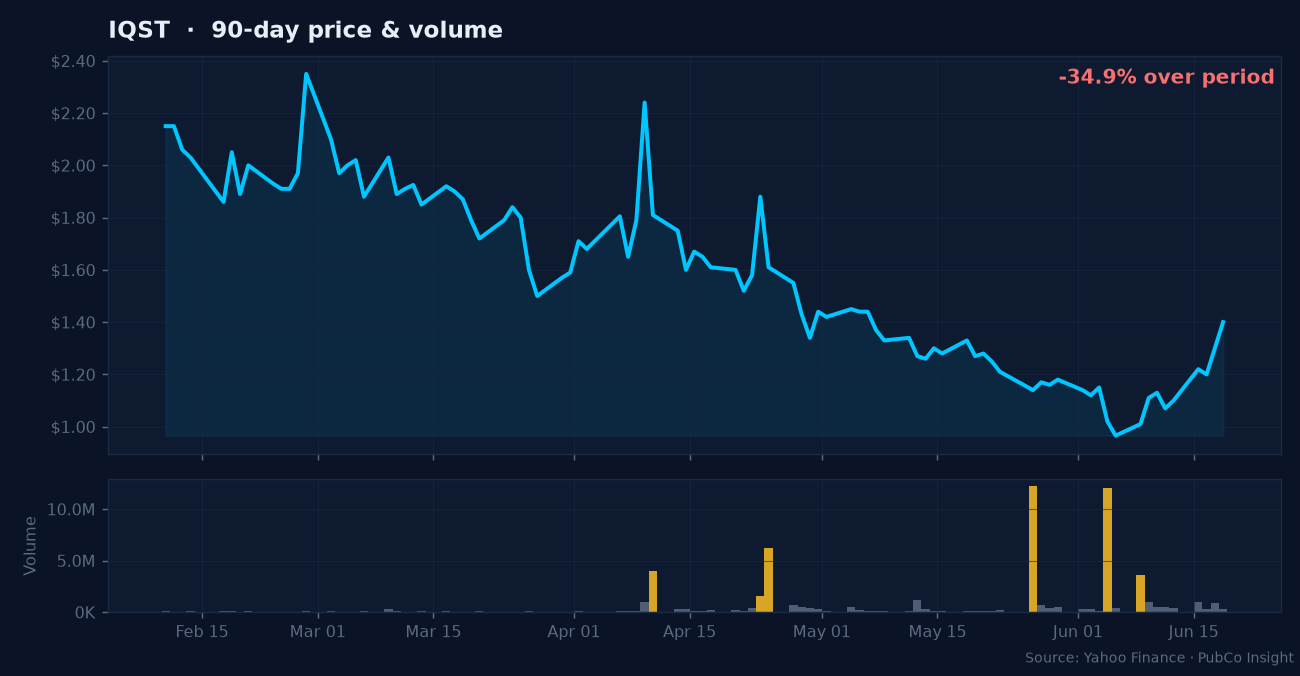
Specifically, the 8-K filed on October 26, 2026, references material agreements and the incurrence of debt, with an associated exhibit detailing a convertible promissory note. This follows a similar 8-K on September 28, 2026, also noting material agreements and debt incurrence. These filings, while standard for companies needing capital, underscore a recurring need for financing that is being met through instruments that can convert into common stock.
The mechanics of convertible notes mean that as debt is converted to equity, the existing share count increases, which in turn dilutes the ownership stake of current shareholders. For a micro-cap company like iQSTEL, which has a relatively small float of just under 11 million shares, even small conversions can represent a significant percentage of outstanding shares. This is a common dynamic in the micro-cap space where immediate cash needs are often prioritized over the long-term dilution implications for shareholders.
The company’s recent 10-Q and subsequent 10-Q/A for the period ending June 30, 2026, provide the financial backdrop against which these financing decisions are made. While the specifics of the financial health are in those longer reports, the consistent appearance of debt and convertible note agreements in recent 8-Ks indicates an ongoing need for working capital or growth funding. Investors would do well to review the terms of these convertible notes, particularly the conversion prices and any discounts to market, to understand the full scope of potential dilution.
For those tracking iQSTEL, understanding the flow of these debt-to-equity conversions is crucial. The structural risk of dilution from these types of financings is a core consideration for any micro-cap investor. PubCo Insight maintains a dedicated tool to help track these dynamics. For a deeper dive into how these financing activities might impact your ownership, consider our dilution risk analysis.
Ultimately, investing in micro-cap companies often means navigating a landscape where capital raises are frequent and can materially impact share structure. As with any investment in this segment, knowing what you own, and how it might change, is paramount.
Primary sources (SEC EDGAR)
8-K 2026-10-26: https://www.sec.gov/Archives/edgar/data/1527702/000166357726000330/iqst8k102626.htm8-K 2026-09-28: https://www.sec.gov/Archives/edgar/data/1527702/000166357726000309/iqst8k092826.htm8-K 2026-09-08: https://www.sec.gov/Archives/edgar/data/1527702/000166357726000262/iqst8k090826.htm10-Q/A 2026-08-20: https://www.sec.gov/Archives/edgar/data/1527702/000166357726000258/iqst10q2a_063026.htm10-Q 2026-08-18: https://www.sec.gov/Archives/edgar/data/1527702/000166357726000254/iqst10q2_063026.htmNT 10-Q 2026-08-14: https://www.sec.gov/Archives/edgar/data/1527702/000166357726000250/iqst_nt10q.htmSee the dilution and promotion flags before you see the pitch.
Each week: the micro and small-caps now showing dilution or paid-promotion signals, with the SEC filing behind every flag. No recommendations, no price targets.