iQSTEL Inc (IQST) Navigates Debt, Equity Financings Amidst Telecom Operations
IQST
iQSTEL Inc (IQST) has been busy in recent months, not just with its stated telecom operations, but with a series of financing activities that consistently show up in its SEC filings. While the company's website talks of global connectivity, the 8-Ks highlight a more immediate reality: a steady stream of debt and equity arrangements that directly impact the capital structure and, by extension, existing shareholders.
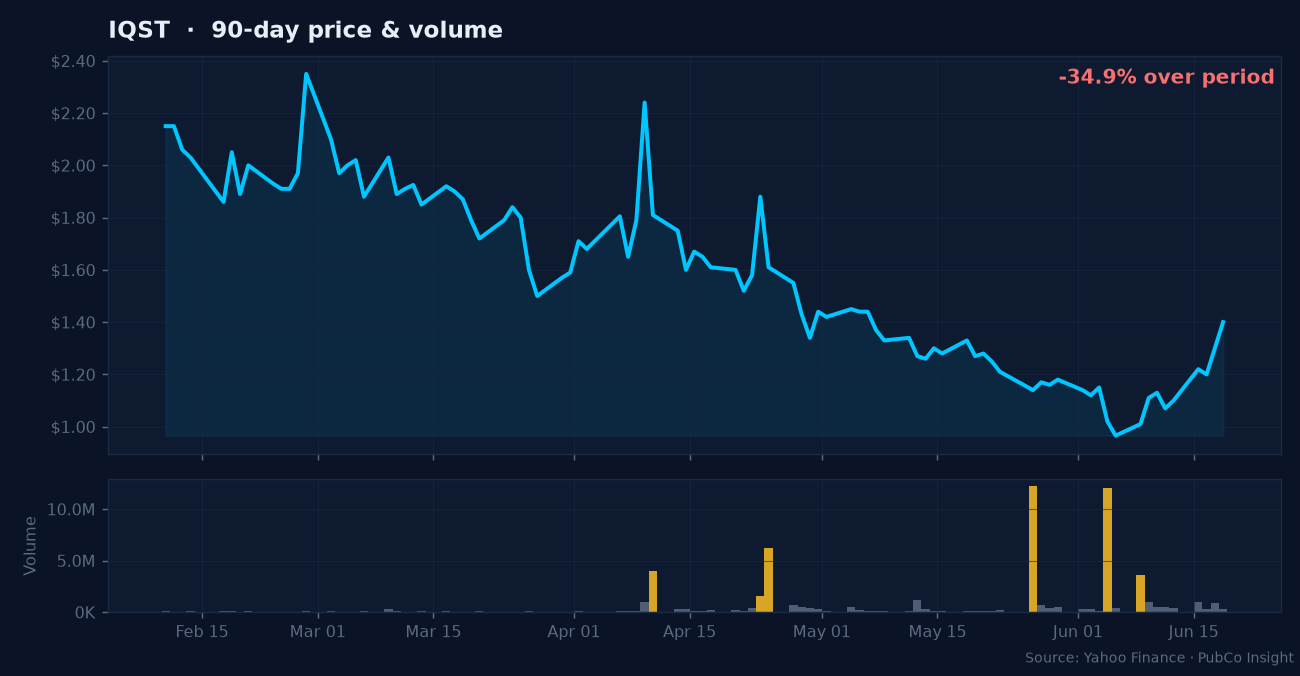
For instance, an 8-K filed on October 26, 2026, details a material agreement alongside the issuance of unregistered securities. This follows another 8-K from September 28, 2026, which also reported a material agreement and further unregistered securities. When a company repeatedly issues unregistered securities, it often signals an ongoing need for capital that is being met through private placements or similar arrangements, which can pave the way for future dilution as these securities are converted or become eligible for resale into the public market. This is a common mechanism for micro-cap funding, but it's crucial for retail investors to understand the mechanics.
The company's most recent 10-Q/A and 10-Q filings, both from mid-August 2026, provide the financial backdrop to these financing efforts, though the specific terms of the latest agreements are found in the subsequent 8-Ks. These detailed reports are where the unglamorous reality of operations, cash flow, and outstanding obligations resides, often contrasting with broader market narratives. The sheer volume of financing-related 8-Ks indicates a company frequently tapping capital markets.
Shareholders should be aware that frequent capital raises, particularly through equity or convertible debt, can lead to an increase in the number of outstanding shares. This dilutes the ownership percentage of existing shareholders and can put downward pressure on the per-share value if not accompanied by a proportional increase in the company's underlying value. For a deeper dive into how such activities can impact your stake, PubCo Insight offers a dilution risk tool that can help contextualize these events.
With a market capitalization under $8 million, iQSTEL operates in a space where capital access is often critical and expensive. The consistent reporting of financing activities suggests that securing capital remains a central part of the company's operational rhythm. Understanding these financial maneuvers, rather than focusing solely on press releases or market chatter, is essential for any investor in the micro-cap space.
Ultimately, the filings paint a picture of a company actively managing its capital needs through various instruments. Retail investors should view these disclosures as a direct signal regarding the company's ongoing financial strategy and the potential long-term implications for their investment.