Ocugen, Inc. (OCGN): Recent Filings Signal Ongoing Dilution Potential
OCGN
Ocugen, Inc. (OCGN) has seen its share count grow significantly, a trend that recent filings indicate is likely to continue. While the biotech sector often requires substantial capital, the mechanics of how Ocugen is funding its operations through equity should be a key focus for investors.
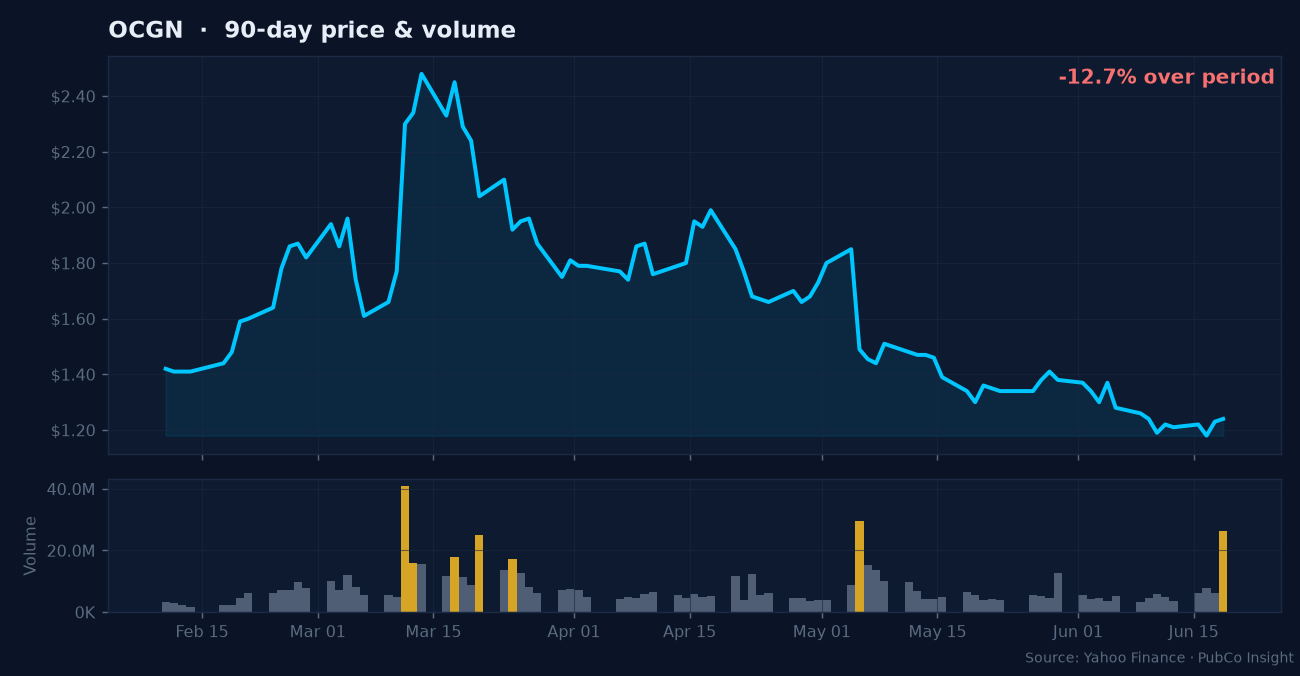
The company's most recent 10-Q, filed November 4, 2026, and its DEFA14A proxy materials from November 6, 2026, lay out a clear picture of a company regularly tapping the equity markets. The 10-Q reported 339.11 million shares outstanding, a substantial increase over prior periods. This growth isn't accidental; the proxy filings reveal shareholder approval for increasing authorized shares, a common precursor to further equity raises.
These authorizations provide Ocugen with the flexibility to issue new shares, which, while necessary for funding drug development, can systematically dilute existing shareholders. Each new share issued spreads the company's value across a larger base, reducing the per-share claim on future earnings or assets. Investors should be aware that such increases in authorized shares often lead to subsequent financing rounds, as detailed on our dilution risk page.
Furthermore, an 8-K filed November 10, 2026, disclosed a material agreement, which, in the context of previous capital raises, suggests ongoing operational funding needs. While the specifics of these agreements are varied, the consistent pattern of securing capital through equity-related instruments is a defining characteristic of Ocugen's financial strategy.
For retail investors, understanding these filings is crucial. The market capitalization of $280.88 million against a rapidly expanding share count means that even positive news might not translate directly into per-share value appreciation if the dilution outpaces growth. The capital structure of a biotech company like Ocugen is dynamic, and staying informed about authorized shares and financing activities is paramount.
Ultimately, Ocugen's filings paint a picture of a company actively managing its capital needs through equity. Investors should weigh the potential of its pipeline against the persistent reality of share dilution, understanding that their ownership stake is a moving target.