Ocugen, Inc. (OCGN) Q3 Report and Recent Filings Signal Ongoing Capital Needs
OCGN
Ocugen, Inc. (OCGN) recently filed its third quarter 2026 10-Q, reporting a net loss of $25.9 million and an accumulated deficit of $705.4 million as of September 30, 2026. This financial snapshot, coupled with recent 8-K filings detailing material agreements, suggests a company still actively seeking avenues to fund its operations and development pipeline.
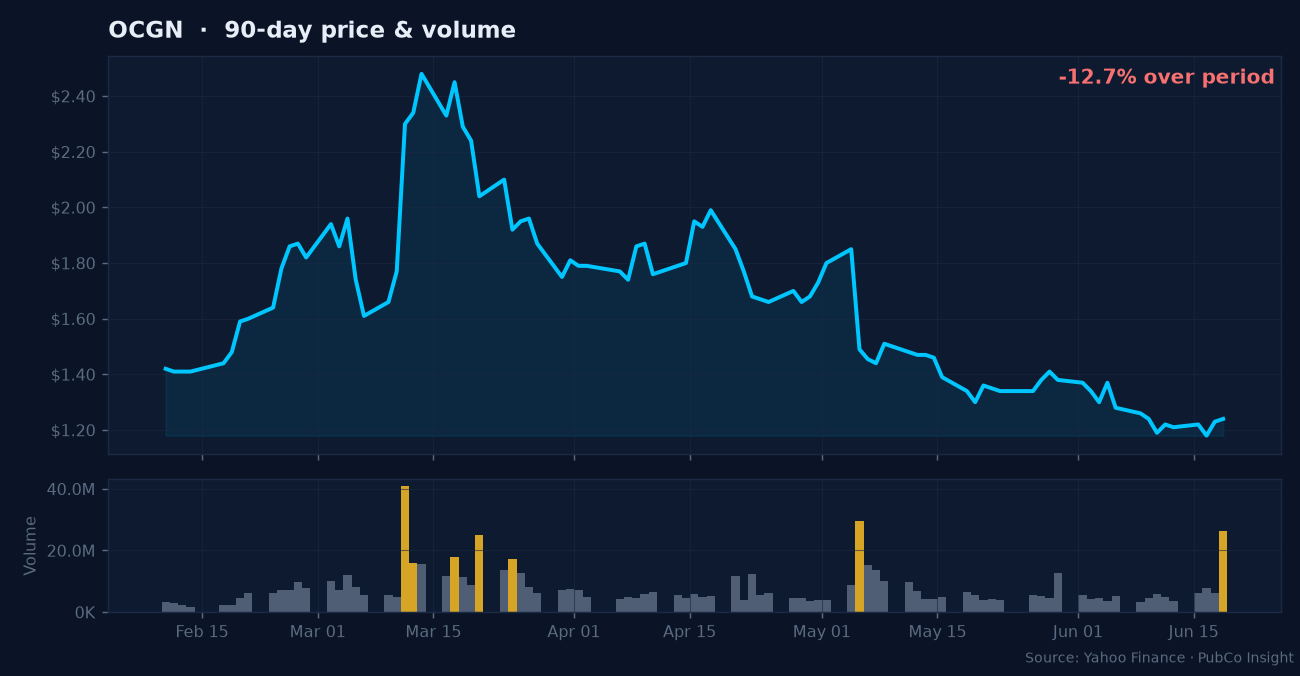
The latest 10-Q highlights that Ocugen's cash and cash equivalents stood at $47.3 million at the end of the third quarter. While this provides some operational runway, the consistent net losses indicate a persistent need for additional capital. The company's business model, typical of early-stage biotech, requires substantial investment in research and development without immediate revenue generation to offset costs.
Adding to the picture, an 8-K filed on November 10, 2026, disclosed a new material agreement. While the specifics of such agreements vary, for a company with Ocugen's financial profile, these often relate to financing activities, partnerships, or licensing deals that can impact future share structure or financial obligations. Investors should consider how these agreements might influence the company's long-term capital strategy and potential for dilution. More information on such risks can be found at /dilution-risk/.
The company also filed a DEFA14A on November 6, 2026, related to its proxy statement. These filings are critical for understanding shareholder proposals, executive compensation, and potential changes to governance that could affect investor interests. Reviewing these documents provides insight into the company's strategic direction and how it plans to fund its future endeavors, often signaling upcoming capital raises or changes in authorized share counts.
For retail investors, the takeaway from Ocugen's recent filings is a clear indication of a company in a capital-intensive sector that continues to burn cash. While pipeline progress is often the focus in biotech, the financial realities presented in the 10-Q and associated 8-Ks underline the importance of understanding the company's balance sheet and its ongoing need for external financing. Knowing what you own means understanding the financial mechanics that support, or challenge, the clinical story.