AETERNUM HEALTH, INC. Triggers a Corporate Overhaul in the Shadows of the OTC, Ticker AETN
AETN
AETERNUM HEALTH, INC. recently completed a corporate transformation that should make any micro-cap investor reach for the regulatory filings rather than the press releases. On July 7, 2026, the company filed an 8-K under ticker AETN that triggered a massive shift, disclosing an acquisition under Item 2.01, unregistered sales of equity under Item 3.02, and a change in control under Item 5.01. It is the classic shell-company playbook, where a quiet corporate vehicle is suddenly packed with new assets, new management, and a fresh batch of unregistered shares.
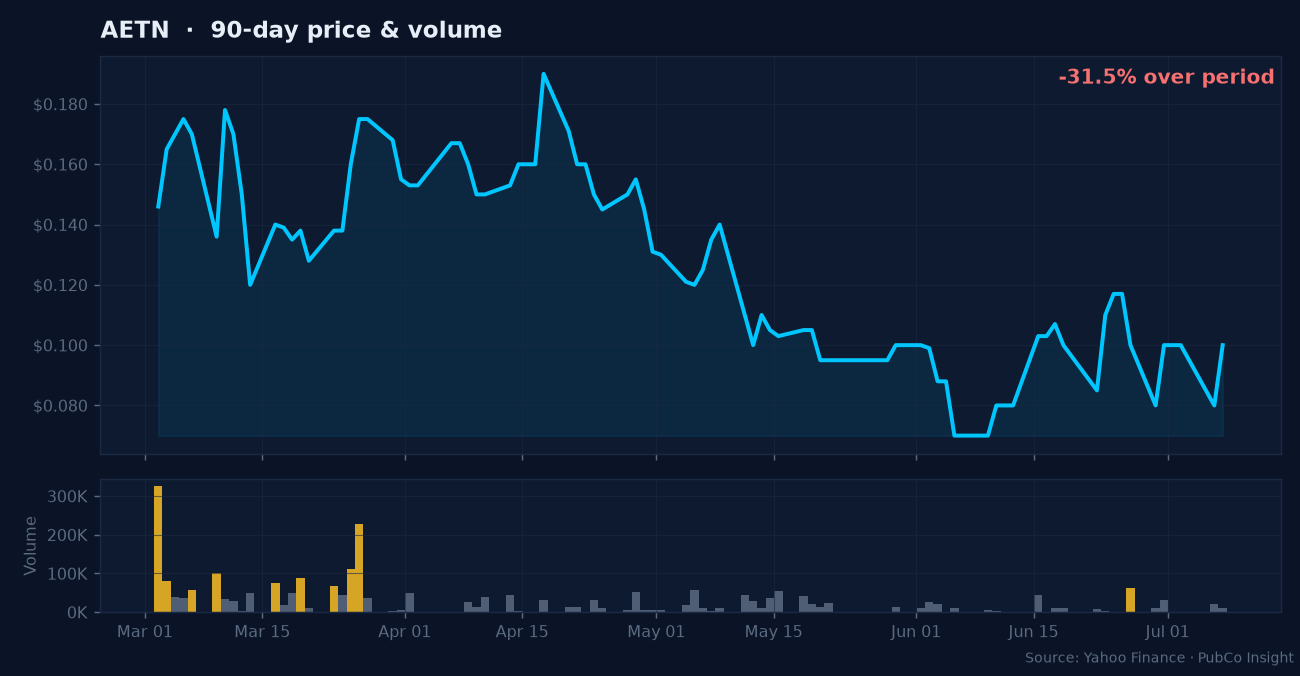
This sudden pivot follows a pattern of administrative strain. Just a few months earlier, AETERNUM HEALTH, INC. filed an NT 10-Q on May 15, 2026, signaling it could not file its quarterly report on time, though it managed to push the 10-Q through a few days later on May 19. When companies undergo rapid changes of control and asset acquisitions while struggling to meet basic filing deadlines, retail investors are often left holding the bag as the capital structure is rewritten behind closed doors.
The mechanics of the July 8-K are where the real risk lies. The filing of Item 3.02 indicates that new equity was issued outside of public registration, a move that frequently sets the stage for future pressure on public shareholders. Investors can track these structural shifts and the resulting dilution mechanics using the dilution risk tools to see how private placements can eventually impact the public float.
While the new name AETERNUM HEALTH, INC. might sound like a fresh start, the historical filings show a company that was classified under miscellaneous electrical machinery and supplies. A sudden pivot in corporate identity, paired with a change of control, means the historical financials in the March 2026 10-K offer little guidance for what the company actually is today. Investors are essentially buying into a brand-new entity with an unproven operational track record, wrapped in the shell of an old OTC ticker. Know what you own, and do not mistake a change of control for guaranteed operational success.
Primary sources (SEC EDGAR)
3 2026-07-15: https://www.sec.gov/Archives/edgar/data/764630/000149315226033330/xslF345X06/ownership.xml8-K 2026-07-07: https://www.sec.gov/Archives/edgar/data/764630/000149315226032365/form8-k.htm10-Q 2026-05-19: https://www.sec.gov/Archives/edgar/data/764630/000149315226024377/form10-q.htmNT 10-Q 2026-05-15: https://www.sec.gov/Archives/edgar/data/764630/000149315226023460/formnt10-q.htm10-K 2026-03-31: https://www.sec.gov/Archives/edgar/data/764630/000149315226014008/form10-k.htmDEF 14C 2026-03-09: https://www.sec.gov/Archives/edgar/data/764630/000149315226009334/formdef14c.htmSee the dilution and promotion flags before you see the pitch.
Each week: the micro and small-caps now showing dilution or paid-promotion signals, with the SEC filing behind every flag. No recommendations, no price targets.