AMFN Overhauls Capital Structure with Back-to-Back Material Filings
AMFN
When an OTC ticker drops a single Form 8-K packed with six separate reporting items, it usually means the corporate furniture is being rearranged while retail investors are looking the other way. American Fusion, Inc. (AMFN) provided just that kind of regulatory paper trail on October 6, 2026, filing a notice covering everything from material agreements to changes in accounting firms and corporate charters.
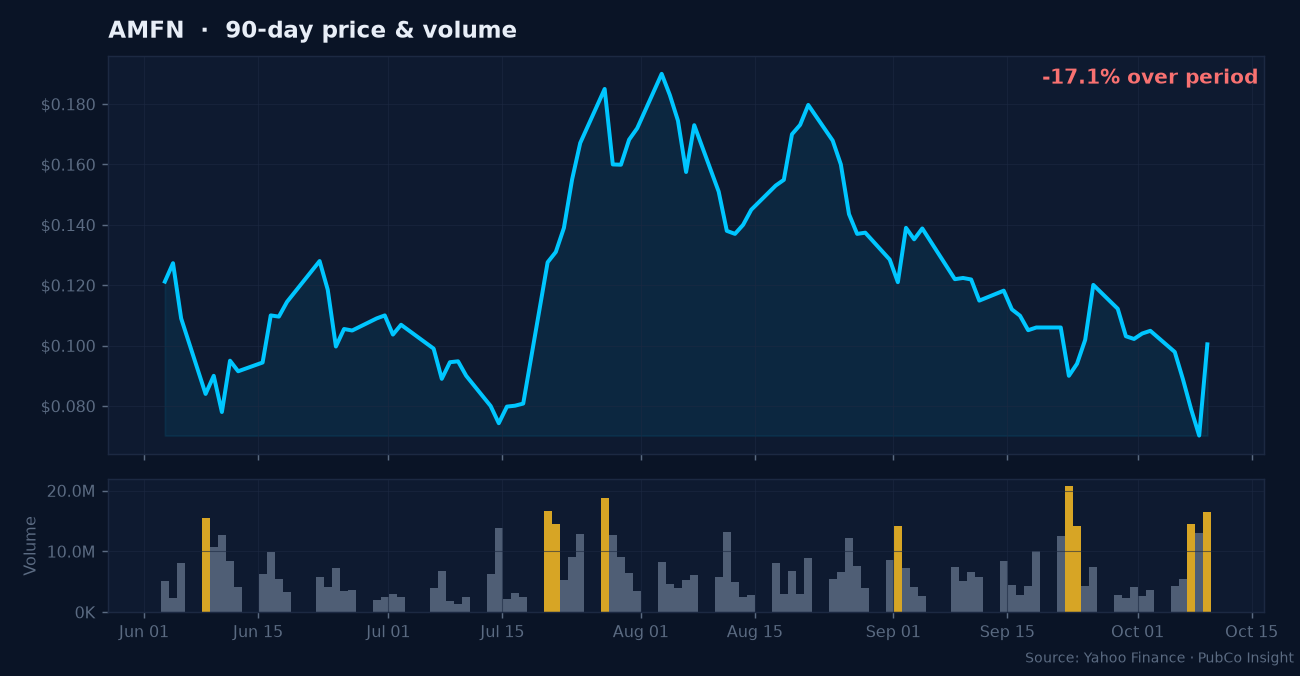
The centerpiece of that disclosure is the combination of Item 1.01 and Item 3.02, which together signal material definitive agreements alongside unregistered sales of equity securities. For existing common shareholders, unregistered share issuances are rarely benign. When an issuer creates new shares outside standard public registration, the immediate mechanic is equity dilution, which expands the share count and quietly eats away at existing ownership percentages.
AMFN did not stop there. The same filing tagged Item 3.03, denoting material modifications to the rights of security holders, alongside Item 5.03 for amendments to articles of incorporation or bylaws, and Item 4.01 marking a change in the company certifying accountant. When a company modifies shareholder rights, adjusts its charter, and swaps auditors all in one turn, tracking the underlying mechanics through our dilution risk tools becomes essential for understanding how the cap table is shifting.
This flurry follows an August 13, 2026 filing that also logged a material agreement under Item 1.01 and executive or director shifts under Item 5.02, flanked by Form 3 and Form 4 insider ownership filings across the summer. While the sector tag classifies the business under electric services, the real activity inside AMFN right now is happening squarely on the balance sheet and inside the legal documents.
Restructuring an OTC corporate vehicle often generates short-term trading excitement, but the filings show an issuer actively printing equity and rewriting its governance terms. Anyone watching AMFN needs to look past generic corporate ambition and read the precise terms of those newly issued shares before deciding where the value actually sits.
Primary sources (SEC EDGAR)
8-K 2026-10-06: https://www.sec.gov/Archives/edgar/data/96664/000107997326001329/amfn_8k.htm4 2026-09-29: https://www.sec.gov/Archives/edgar/data/96664/000107997326001308/xslF345X06/ownership.xml3 2026-09-29: https://www.sec.gov/Archives/edgar/data/96664/000107997326001305/xslF345X06/ownership.xml8-K 2026-08-13: https://www.sec.gov/Archives/edgar/data/96664/000107997326001073/amfn_8k.htm10-Q 2026-08-12: https://www.sec.gov/Archives/edgar/data/96664/000107997326001063/amfn_10q-063026.htm3 2026-06-10: https://www.sec.gov/Archives/edgar/data/96664/000107997326000824/xslF345X06/ownership.xmlSee the dilution and promotion flags before you see the pitch.
Each week: the micro and small-caps now showing dilution or paid-promotion signals, with the SEC filing behind every flag. No recommendations, no price targets.