Analyzing Dilution and Debt Risks at Nuo Therapeutics, Inc. (AURX)
AURX
Nuo Therapeutics, Inc. (AURX), a medical device company operating in the surgical and medical instruments sector, has recently experienced a series of significant corporate and financial developments. With a market capitalization of approximately 48.9 million dollars and 48.41 million shares outstanding, this OTC-traded micro-cap company requires careful scrutiny regarding its capital structure and financing activities. Recent disclosures indicate that the company is actively managing its debt and equity positions, which has direct implications for existing shareholders.
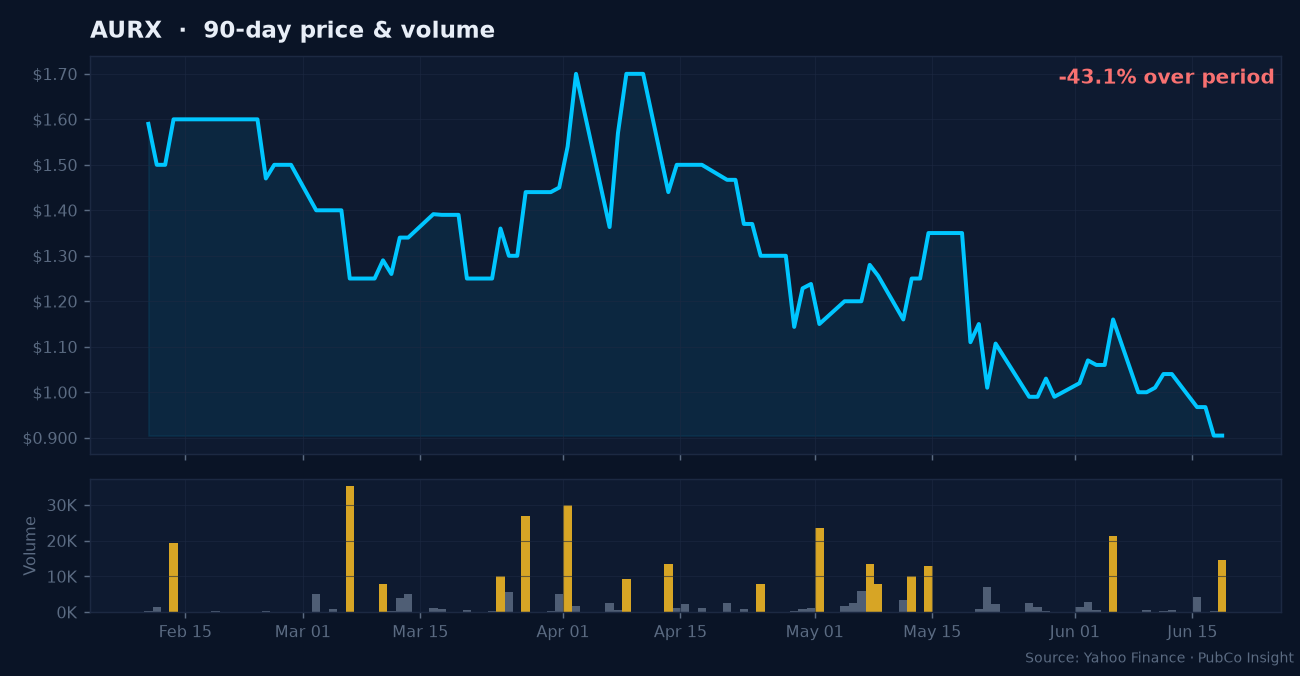
A critical filing for investors to review is the Form 8-K filed on June 3, 2026. This report discloses multiple material events, including Item 1.01 (Entry into a Material Definitive Agreement), Item 2.03 (Creation of a Direct Financial Obligation), and Item 3.02 (Unregistered Sales of Equity Securities). The combination of these items indicates that Nuo Therapeutics has entered into new debt arrangements while simultaneously issuing unregistered equity. Unregistered sales of equity can lead to immediate dilution for public retail investors, as new shares are introduced into the market outside of public offerings.
The June 3, 2026 transaction coincided with a Schedule 13D/A filing on the same day, which tracks changes in beneficial ownership by major shareholders. Additionally, Form 4 filings on June 2, 2026, and June 5, 2026, alongside an amended Form 4/A on June 2, 2026, show insider transaction activity. For retail investors, heavy insider reporting combined with private placements often signals a period of transition or a pressing need for capital. Earlier, on May 14, 2026, the company filed an 8-K containing an earnings release under Item 2.02, providing a baseline of their operational performance leading up to these financing decisions.
When evaluating micro-cap companies like Nuo Therapeutics, understanding the balance between operational funding and shareholder dilution is essential. The reliance on unregistered equity sales to satisfy financial obligations or secure agreements, as evidenced by the June 3 filing, highlights the ongoing dilution risk. Investors should monitor subsequent quarterly filings to assess how these debt obligations and share issuances impact the company's balance sheet, cash runway, and overall capital structure over the long term.
Primary sources (SEC EDGAR)
4 2026-06-05: https://www.sec.gov/Archives/edgar/data/1091596/000143774926019768/xslF345X06/rdgdoc.xmlSCHEDULE 13D/A 2026-06-03: https://www.sec.gov/Archives/edgar/data/1091596/000167475226000002/xslSCHEDULE_13D_X02/primary_doc.xml8-K 2026-06-03: https://www.sec.gov/Archives/edgar/data/1091596/000143774926019199/aurx20260602_8k.htm4 2026-06-02: https://www.sec.gov/Archives/edgar/data/1091596/000143774926019246/xslF345X06/rdgdoc.xml4/A 2026-06-02: https://www.sec.gov/Archives/edgar/data/1091596/000143774926019244/xslF345X06/rdgdoc.xml8-K 2026-05-14: https://www.sec.gov/Archives/edgar/data/1091596/000143774926017116/aurx20260514_8k.htmSee the dilution and promotion flags before you see the pitch.
Each week: the micro and small-caps now showing dilution or paid-promotion signals, with the SEC filing behind every flag. No recommendations, no price targets.