Aspira Women's Health Faces Structural Headwinds as AWHL Turns to Private Placements
AWHL
Aspira Women's Health represents the classic micro-cap biotech paradox, where the promise of diagnostic innovation constantly battles the gravity of the balance sheet. With a modest market capitalization of just 21.58 million dollars, AWHL has recently turned to the private markets to keep the lights on, a move that highlights the company's persistent need for operational capital.
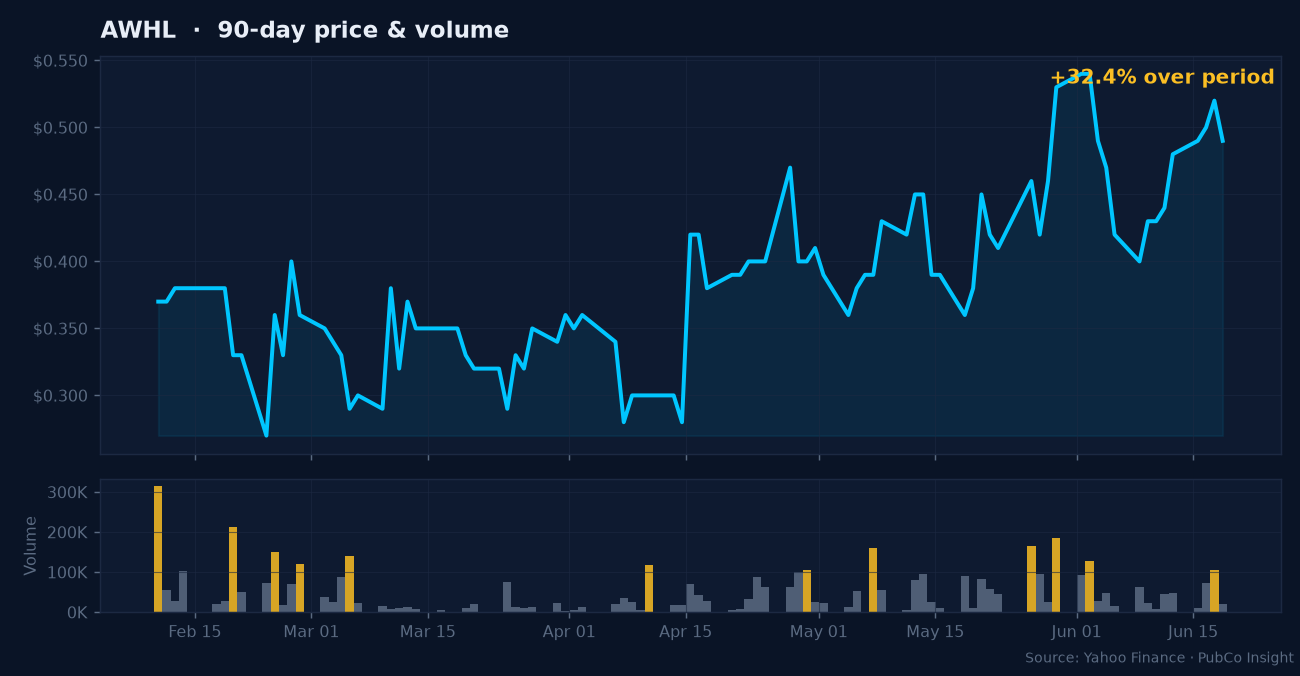
The structural reality of this funding strategy is laid bare in the company's June 9, 2026, Form 8-K filing. By triggering Item 1.01 and Item 3.02, AWHL confirmed the entry into a material definitive agreement involving the unregistered sale of equity securities. For retail investors, this is the mechanics of dilution in real time, where private placements provide immediate cash to the company but dilute the ownership percentage of existing public shareholders.
This June transaction follows closely on the heels of another material agreement filed on May 26, 2026. When a biotech firm must execute back to back financing agreements within a span of two weeks, it signals that cash burn remains a pressing concern that public market revenues are not yet ready to cover. The reliance on these private agreements often comes with dilutive warrants or discounted share prices that place a ceiling on public share appreciation.
Furthermore, recent ownership filings and proxy materials, including a DEFA14A filed on May 29, 2026, suggest that management is actively working to restructure its equity incentives and governance framework to accommodate this new capital reality. While these moves keep the company capitalized, they also shift the risk profile heavily onto the shoulders of retail investors who buy into the open market.
Investors looking at AWHL must look past the clinical potential of its diagnostic pipeline and focus on the capital structure. When a company repeatedly taps private funding sources, it is a reminder that clinical progress is expensive. Know what you own, and understand that in the micro-cap biotech space, your equity position is only as strong as the next financing round.
Primary sources (SEC EDGAR)
8-K 2026-06-17: https://www.sec.gov/Archives/edgar/data/926617/000092661726000045/awhl-20260617x8k.htmSCHEDULE 13D/A 2026-06-11: https://www.sec.gov/Archives/edgar/data/926617/000149315226028278/xslSCHEDULE_13D_X02/primary_doc.xml4 2026-06-09: https://www.sec.gov/Archives/edgar/data/926617/000149315226027952/xslF345X06/ownership.xml8-K 2026-06-09: https://www.sec.gov/Archives/edgar/data/926617/000092661726000042/awhl-20260529x8k.htmDEFA14A 2026-05-29: https://www.sec.gov/Archives/edgar/data/926617/000092661726000039/awhl-20260529xdefa14a.htm4 2026-05-29: https://www.sec.gov/Archives/edgar/data/926617/000149315226026359/xslF345X06/ownership.xmlSee the dilution and promotion flags before you see the pitch.
Each week: the micro and small-caps now showing dilution or paid-promotion signals, with the SEC filing behind every flag. No recommendations, no price targets.