Bio Green Med Solution, Inc. Trades the Quiet OTC Life for a High Stakes Merger Paper Trail on BGMSP
BGMSP
Bio Green Med Solution, Inc. is attempting the classic microcap pivot, trading its quiet existence as a thinly traded wholesale goods business for the complex, paper-heavy world of corporate restructuring. The company, trading under the ticker BGMSP, has unleashed a flurry of regulatory filings over a short period, signaled by a massive S-4 registration statement on June 16, 2026. While the headline story of a merger or acquisition always brings a wave of speculative optimism, the structural reality buried in the SEC filings suggests retail investors should keep their enthusiasm in check.
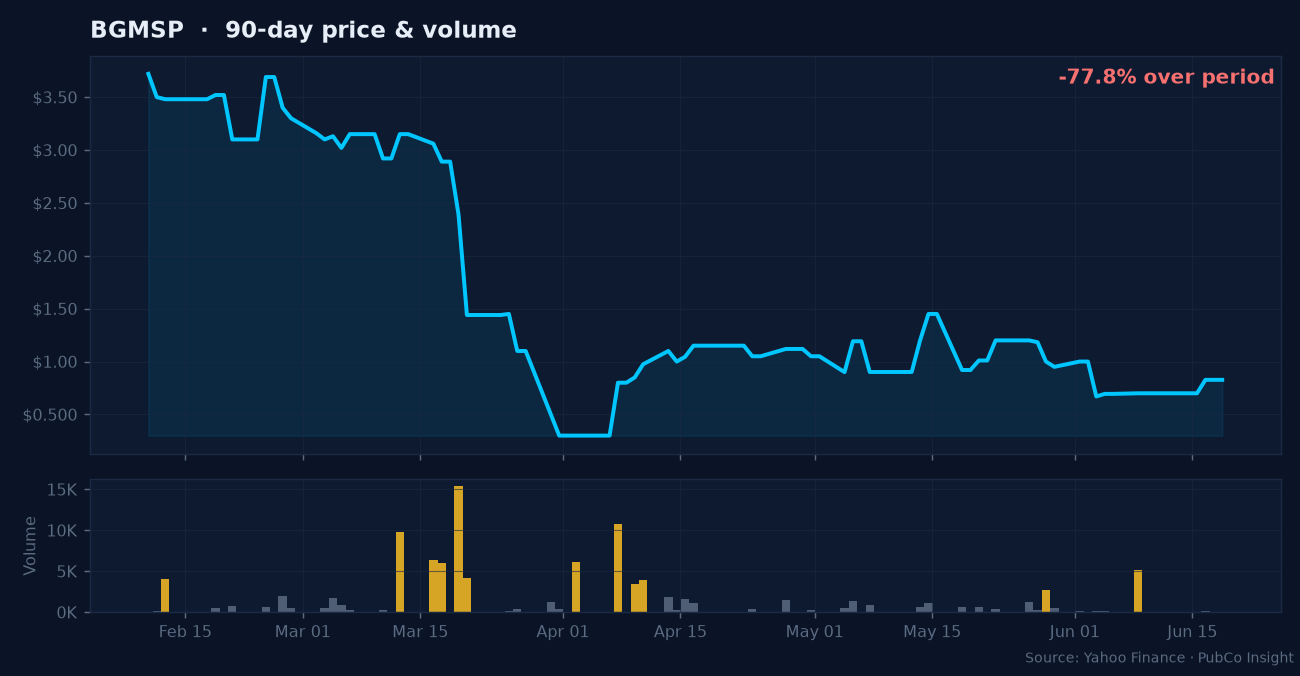
A closer look at the timeline reveals a company moving at breakneck speed. On June 4, 2026, Bio Green Med Solution, Inc. filed an 8-K announcing a material definitive agreement, followed quickly by a prospectus under Rule 425. Just six days later, on June 10, another 8-K dropped, detailing an Item 3.02 unregistered sale of equity securities. When a microcap company with a modest market capitalization of under five million dollars starts issuing unregistered shares while simultaneously filing an S-4 merger document, it is a clear signal that the existing share structure is about to undergo a dramatic transformation.
For retail shareholders, the primary hazard here is not the strategic vision of the merger, but the mechanics of dilution. The June 10 filing details a private placement of equity that bypasses public registration, a move that typically precedes a major dilution event. Investors can track these structural changes and assess the potential impact on their holdings by monitoring the company's dilution risk profile. When new shares are issued in private transactions alongside major merger filings, the existing public float is frequently diluted long before the combined entity ever generates its first dollar of consolidated revenue.
The governance machinery is also moving in tandem with these financial maneuvers. On June 22, 2026, Bio Green Med Solution, Inc. filed an 8-K reporting the results of a shareholder vote, followed by an additional corporate update on July 1. This rapid succession of votes and agreements indicates that the restructuring is already locked in. While management is executing its playbook with precision, the ultimate cost of this transformation will be borne by the public share count. Knowing what you own means recognizing that a merger is not just a growth story, it is a highly dilutive corporate restructuring where early investors often pay the entry fee for the new partners.
Primary sources (SEC EDGAR)
8-K 2026-07-01: https://www.sec.gov/Archives/edgar/data/1130166/000149315226031542/form8-k.htm8-K 2026-06-22: https://www.sec.gov/Archives/edgar/data/1130166/000149315226029452/form8-k.htmS-4 2026-06-16: https://www.sec.gov/Archives/edgar/data/1130166/000149315226028882/forms-4.htm8-K 2026-06-10: https://www.sec.gov/Archives/edgar/data/1130166/000149315226028072/form8-k.htm425 2026-06-04: https://www.sec.gov/Archives/edgar/data/1130166/000149315226027294/form425.htm8-K 2026-06-04: https://www.sec.gov/Archives/edgar/data/1130166/000149315226027291/form8-k.htmSee the dilution and promotion flags before you see the pitch.
Each week: the micro and small-caps now showing dilution or paid-promotion signals, with the SEC filing behind every flag. No recommendations, no price targets.