BIO KEY INTERNATIONAL INC (BKYI): Unregistered Share Sales and Fresh Proxy Filings Hit the Tape
BKYI
When a micro-cap software vendor reports quarterly numbers alongside an unregistered equity issuance, the story is rarely just about top-line growth. BIO KEY INTERNATIONAL INC, trading on the OTC markets with a market capitalization of roughly $3.7 million and a compact share base of just 1.09 million shares, delivered a flurry of regulatory disclosures in mid-August that warrants a close look at the mechanics behind its capitalization table.
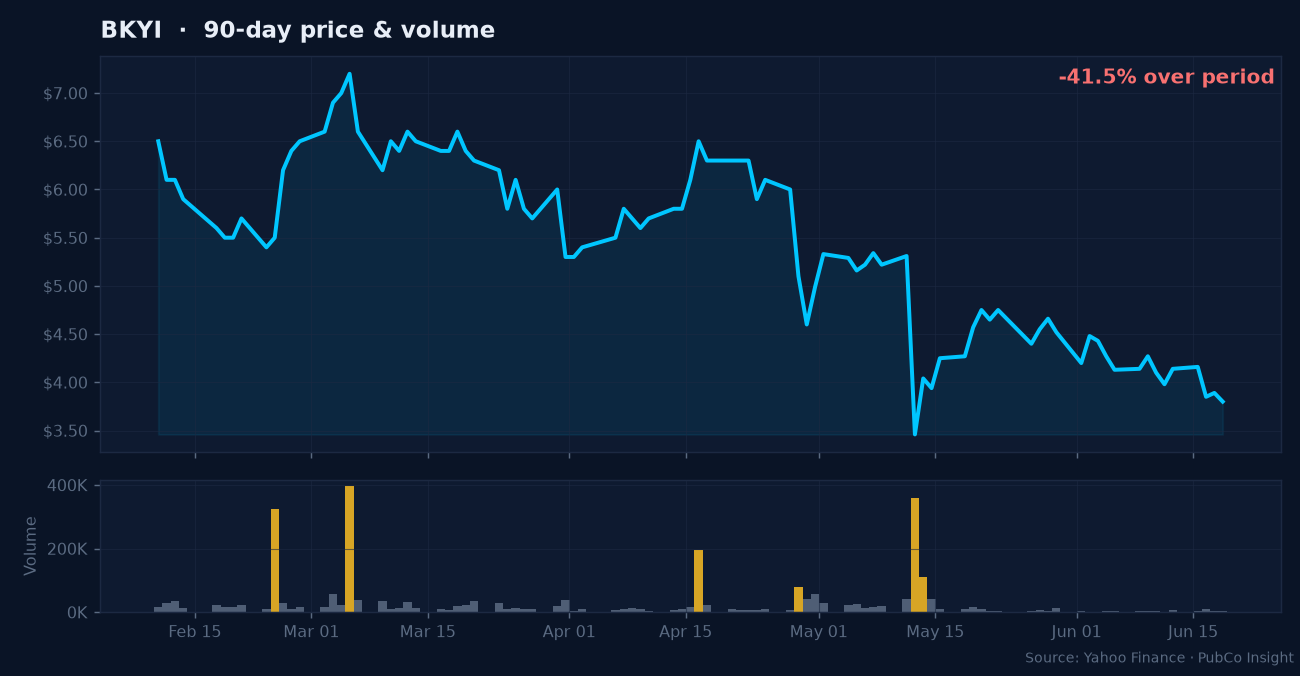
On August 13, 2026, BIO KEY INTERNATIONAL INC filed an 8-K disclosing both an entry into a material definitive agreement under Item 1.01 and an unregistered sale of equity securities under Item 3.02, followed immediately by its quarterly report on Form 10-Q. Issuing shares directly outside of a registered public offering is a familiar route for small issuers, but in micro-caps with limited liquidity, private placements often come with structural commitments that common shareholders feel down the road. Investors tracking these pipeline shifts can evaluate the exposure using our dilution risk tracker.
The paper trail did not stop at the quarterly balance sheet. The very next day, on August 14, 2026, the company posted an Item 2.02 earnings release and followed it with a preliminary proxy statement on Form PRE 14A. That PRE 14A landed barely three weeks after the company circulated its definitive proxy materials on July 24, 2026. Rapidly calling another shareholder vote or revising governance proposals right after an equity issuance is a classic signal that capital structure adjustments are underway.
Operating in prepackaged software under ticker BKYI, the company must balance ongoing operating costs against a tight share structure. An unregistered stock sale dilutes existing owners directly, and subsequent proxy filings frequently seek the corporate authority needed to accommodate expanded equity reserves or financing arrangements.
For micro-cap market participants, watching headline revenue announcements is never enough. The real operational roadmap is written in the Item 3.02 disclosures and preliminary proxy proposals, where the price of ongoing liquidity becomes tangible for common holders.
Primary sources (SEC EDGAR)
PRE 14A 2026-08-14: https://www.sec.gov/Archives/edgar/data/1019034/000143774926028065/bkyi20260814_pre14a.htm8-K 2026-08-14: https://www.sec.gov/Archives/edgar/data/1019034/000143774926027829/bkyi20260813c_8k.htm8-K 2026-08-13: https://www.sec.gov/Archives/edgar/data/1019034/000143774926027730/bkyi20260813_8k.htm10-Q 2026-08-13: https://www.sec.gov/Archives/edgar/data/1019034/000143774926027723/bkyi20260630_10q.htmARS 2026-07-24: https://www.sec.gov/Archives/edgar/data/1019034/000143774926024421/bkyi20260724_ars.pdfDEF 14A 2026-07-24: https://www.sec.gov/Archives/edgar/data/1019034/000143774926024414/bkyi20260722_def14a.htmSee the dilution and promotion flags before you see the pitch.
Each week: the micro and small-caps now showing dilution or paid-promotion signals, with the SEC filing behind every flag. No recommendations, no price targets.