Cineverse Corp. Faces the Reality of Continuous Capital Raises as CNVS Keeps the Printing Press Warm
CNVS
Cineverse Corp. wants investors to focus on its digital streaming pivot, but the most active channel at the company remains the equity distribution desk. While promotional narratives paint a picture of a scaling entertainment platform, a look at the regulatory filings for CNVS reveals a business model heavily reliant on the continuous issuance of new shares to keep the lights on.
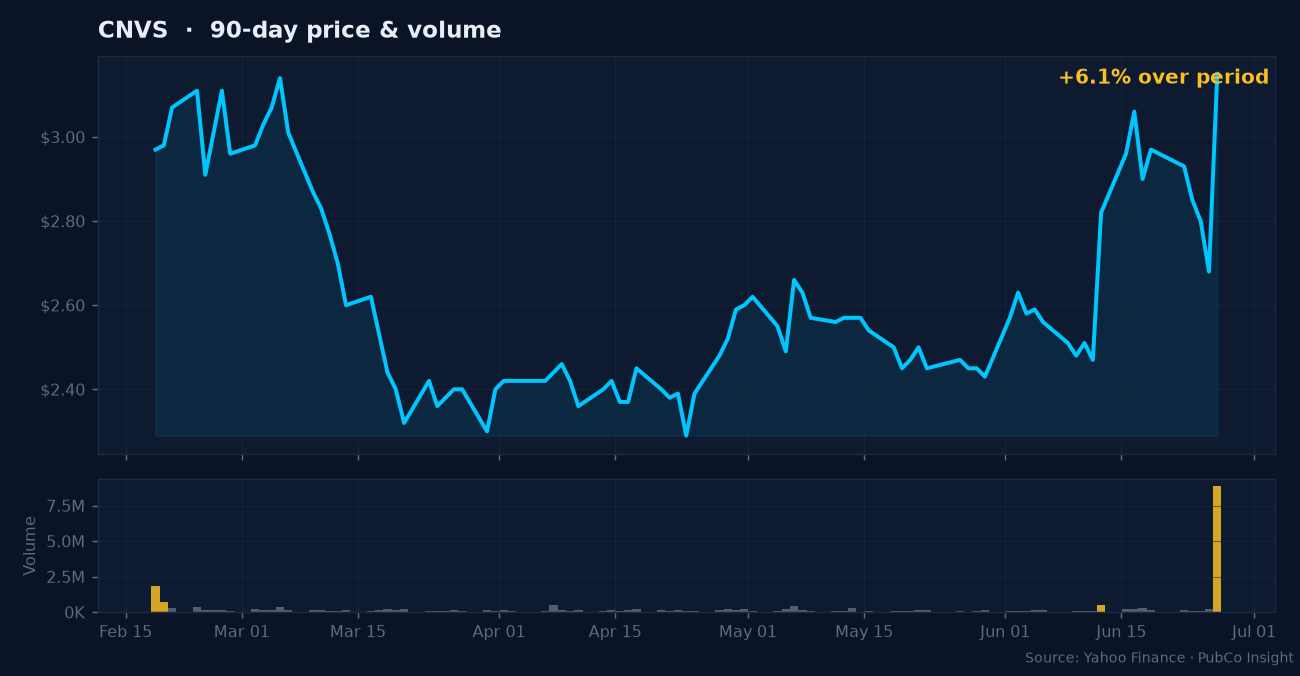
The structural reality of Cineverse Corp. is laid bare in its June 8, 2026, Form 424B5 prospectus supplement. These frequent shelf registration drawdowns serve as a reminder that when a micro-cap company with a market capitalization of under 70 million dollars cannot generate sufficient organic cash flow, existing shareholders end up footing the bill. Every tap of the prospectus supplement dilutes the fractional ownership of retail investors who bought into the streaming narrative.
This ongoing dilution is not a temporary hurdle but a structural feature of the company. The filings show a persistent pattern of equity issuance, including material agreements involving private placements and share issuances earlier in May 2026. When a company repeatedly uses its stock as currency to fund operations or settle obligations, it places a constant downward pressure on the share price, making sustainable per-share growth extremely difficult to achieve.
Ultimately, Cineverse Corp. presents a classic micro-cap dilemma. While the headline news releases focus on content acquisitions and streaming distribution milestones, the SEC filings tell a much simpler story of capital consumption. Investors looking at CNVS must decide whether they are buying a growing media business or simply funding an ongoing capital-raising machine.
Primary sources (SEC EDGAR)
10-K 2026-06-26: https://www.sec.gov/Archives/edgar/data/1173204/000119312526284027/cnvs-20260331.htm8-K 2026-06-26: https://www.sec.gov/Archives/edgar/data/1173204/000119312526283983/cnvs-20260626.htm424B5 2026-06-08: https://www.sec.gov/Archives/edgar/data/1173204/000119312526261936/june_2026_pro_supp_-_424.htm8-K 2026-05-28: https://www.sec.gov/Archives/edgar/data/1173204/000119312526245350/cnvs-20260528.htmSCHEDULE 13G/A 2026-05-15: https://www.sec.gov/Archives/edgar/data/1173204/000101359426000610/xslSCHEDULE_13G_X02/primary_doc.xml4 2026-05-05: https://www.sec.gov/Archives/edgar/data/1173204/000119312526206969/xslF345X06/ownership.xmlSee the dilution and promotion flags before you see the pitch.
Each week: the micro and small-caps now showing dilution or paid-promotion signals, with the SEC filing behind every flag. No recommendations, no price targets.