Cineverse Corp. (CNVS): Recent Filings Show a Familiar Path for a Small-Cap Stock
CNVS
Cineverse Corp. (CNVS) has seen some recent attention, but the latest 10-Q filed on August 13, 2026, along with an accompanying 8-K, paints a picture that is often unglamorous for micro-cap investors. While news cycles may focus on content or partnerships, the regulatory filings provide a more grounded view of the company's operational reality and financial standing.
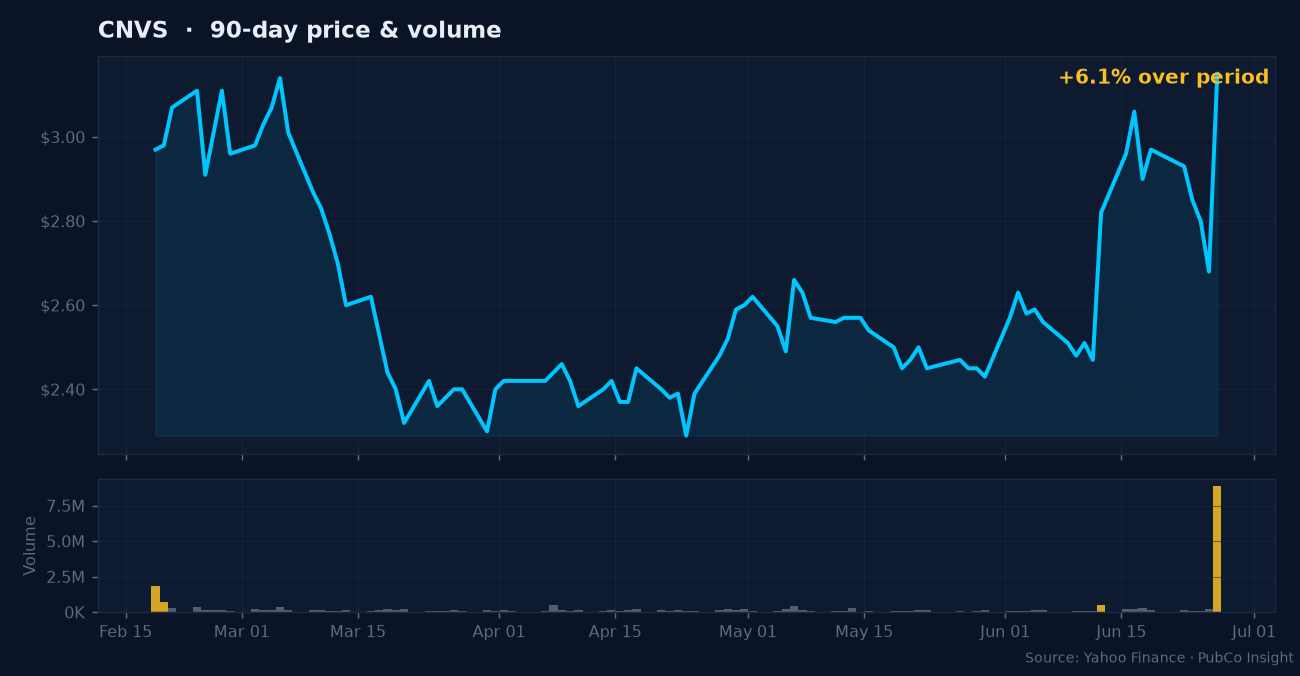
The August 13, 2026 10-Q, covering the period ending June 30, 2026, is the place to start for anyone looking to understand CNVS. Quarterly reports are where the rubber meets the road, detailing revenues, expenses, and, critically, the cash position. These documents typically outline the ongoing operational costs and the burn rate, which are essential for assessing a company's runway without additional financing. For a company with a market capitalization around $60 million, every dollar of cash and every dollar of debt matters.
Shareholders should also note the DEF 14A filed on August 10, 2026. Proxy statements like this outline critical governance matters, including executive compensation, board elections, and any proposals that could directly affect shareholder value. Understanding who is making decisions and how they are compensated is a core part of evaluating any public company, especially one in the micro-cap space where governance can sometimes be less robust or more concentrated.
While there are no immediate red flags like going-concern warnings or late-filing notices in the most recent documents, the consistent rhythm of quarterly filings, coupled with other forms like the SCHEDULE 13G/A on August 14, 2026, which details significant ownership stakes, means investors need to remain diligent. Large ownership changes or consistent sales by insiders, as indicated by Form 4 and Form 144 filings, can offer insights into the confidence of those closest to the company.
For CNVS, like many small-cap companies, the financial narrative is often one of balancing growth ambitions with the practicalities of capital. The filings show a company operating in a competitive sector, and the financial statements contained within the 10-Q will detail how effectively it is doing so. Investors should always consider the potential for dilution, a common feature in the micro-cap world, where capital raises can significantly increase the share count and impact per-share metrics.
Ultimately, investing in micro-cap companies like Cineverse Corp. requires a commitment to reading the primary documents. The filings provide the true operational and financial context, allowing investors to form their own conclusions based on data, not just market sentiment or promotional materials. Know what you own by knowing what the company has actually filed with the SEC.
Primary sources (SEC EDGAR)
4 2026-08-20: https://www.sec.gov/Archives/edgar/data/1173204/000119312526359706/xslF345X06/ownership.xml144 2026-08-19: https://www.sec.gov/Archives/edgar/data/1173204/000195917326006234/xsl144X01/primary_doc.xmlSCHEDULE 13G/A 2026-08-14: https://www.sec.gov/Archives/edgar/data/1173204/000101359426000919/xslSCHEDULE_13G_X02/primary_doc.xml10-Q 2026-08-13: https://www.sec.gov/Archives/edgar/data/1173204/000119312526349428/cnvs-20260630.htm8-K 2026-08-13: https://www.sec.gov/Archives/edgar/data/1173204/000119312526349221/cnvs-20260813.htmDEF 14A 2026-08-10: https://www.sec.gov/Archives/edgar/data/1173204/000119312526342483/cnvs-20260807.htmSee the dilution and promotion flags before you see the pitch.
Each week: the micro and small-caps now showing dilution or paid-promotion signals, with the SEC filing behind every flag. No recommendations, no price targets.