Cineverse Corp. (CNVS) Faces Debt Repayment and Dilution Concerns
CNVS
Cineverse Corp. (CNVS) recently announced new financing, a move that often brings a pop of enthusiasm. However, the details in the latest 8-K filing from September 4, 2026, paint a more complex picture for shareholders, particularly concerning the cost of capital and potential dilution. The company entered into a securities purchase agreement for a $5 million secured promissory note, but the terms are worth a closer look.
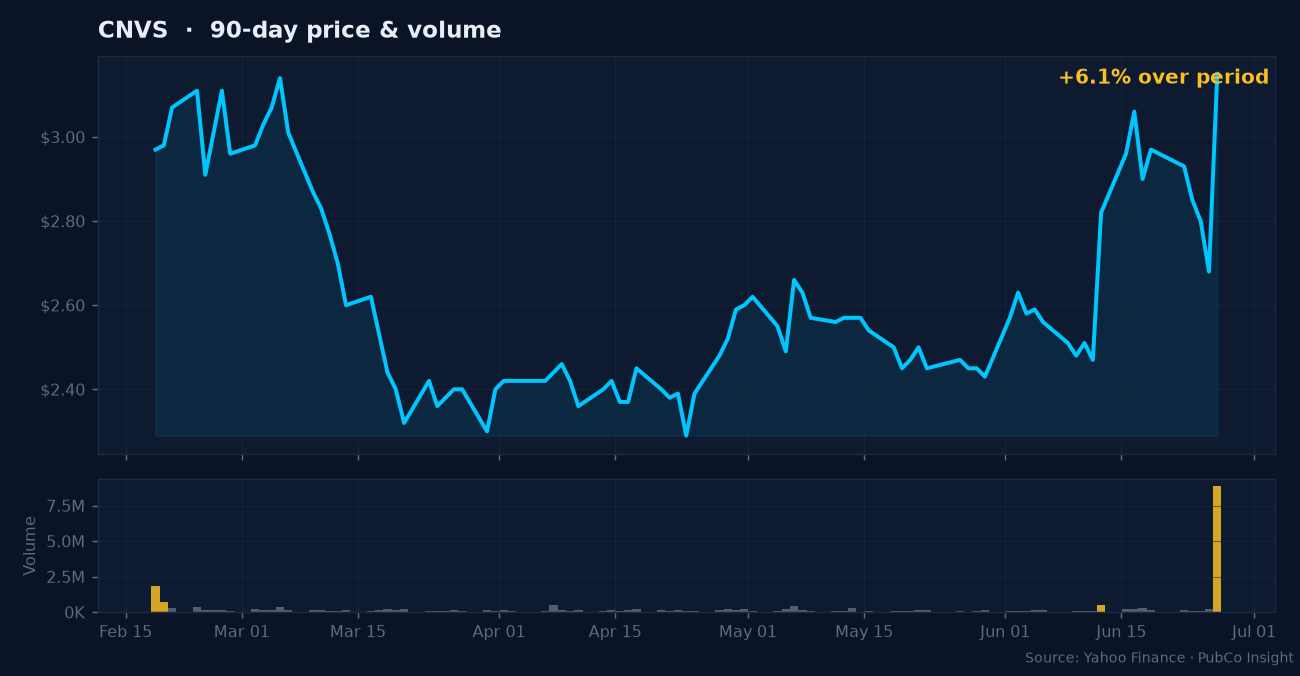
The note carries a substantial 12.5% interest rate, a figure that signals lenders perceive significant risk. More critically, the agreement includes the issuance of warrants to purchase 3,500,000 shares of common stock at an exercise price of $0.60 per share. This means that if these warrants are exercised, they represent a significant increase in the outstanding share count. With 23.42 million shares currently outstanding, 3.5 million new shares would translate to approximately 15% dilution for existing shareholders.
This isn't an isolated event. Our dilution risk tools have flagged multiple S-filings and 424B filings from Cineverse, indicating a pattern of capital raises that rely on issuing new equity or equity-linked securities. While debt can provide necessary operating capital, when it comes at a high interest rate and with substantial warrant coverage, it can become a double-edged sword, increasing both interest expense and the potential for future share dilution.
The 8-K also notes that the proceeds from this new debt are intended for working capital and general corporate purposes, including the repayment of existing indebtedness. This suggests that the company is using new, expensive debt to service older obligations, a cycle that can strain cash flow and continually put pressure on the balance sheet. Investors should consider how this impacts the company's long-term financial health and its ability to generate sustainable free cash flow.
Reviewing the filings is crucial for understanding the true cost of these financing activities. While the market often reacts to the headline of a financing deal, the fine print, particularly concerning warrants and interest rates, reveals the underlying financial pressures and the potential for existing shareholder value to be diluted over time. Knowing what you own means understanding how capital is being raised and what it truly costs the company.
Primary sources (SEC EDGAR)
8-K 2026-09-04: https://www.sec.gov/Archives/edgar/data/1173204/000119312526383714/cnvs-20260831.htm4 2026-08-20: https://www.sec.gov/Archives/edgar/data/1173204/000119312526359706/xslF345X06/ownership.xml144 2026-08-19: https://www.sec.gov/Archives/edgar/data/1173204/000195917326006234/xsl144X01/primary_doc.xmlSCHEDULE 13G/A 2026-08-14: https://www.sec.gov/Archives/edgar/data/1173204/000101359426000919/xslSCHEDULE_13G_X02/primary_doc.xml10-Q 2026-08-13: https://www.sec.gov/Archives/edgar/data/1173204/000119312526349428/cnvs-20260630.htm8-K 2026-08-13: https://www.sec.gov/Archives/edgar/data/1173204/000119312526349221/cnvs-20260813.htmSee the dilution and promotion flags before you see the pitch.
Each week: the micro and small-caps now showing dilution or paid-promotion signals, with the SEC filing behind every flag. No recommendations, no price targets.