Cineverse Corp. (CNVS): Debt Restructuring and Dilution Signals in Recent Filings
CNVS
Cineverse Corp. (CNVS) recently announced a debt restructuring that may sound like a positive step, but a closer look at the 8-K filed on September 4, 2026, reveals the potential for significant shareholder dilution. The company entered into an agreement to exchange outstanding debt for new convertible notes, which, while reducing immediate cash obligations, introduce a mechanism for future equity issuance that investors should not overlook.
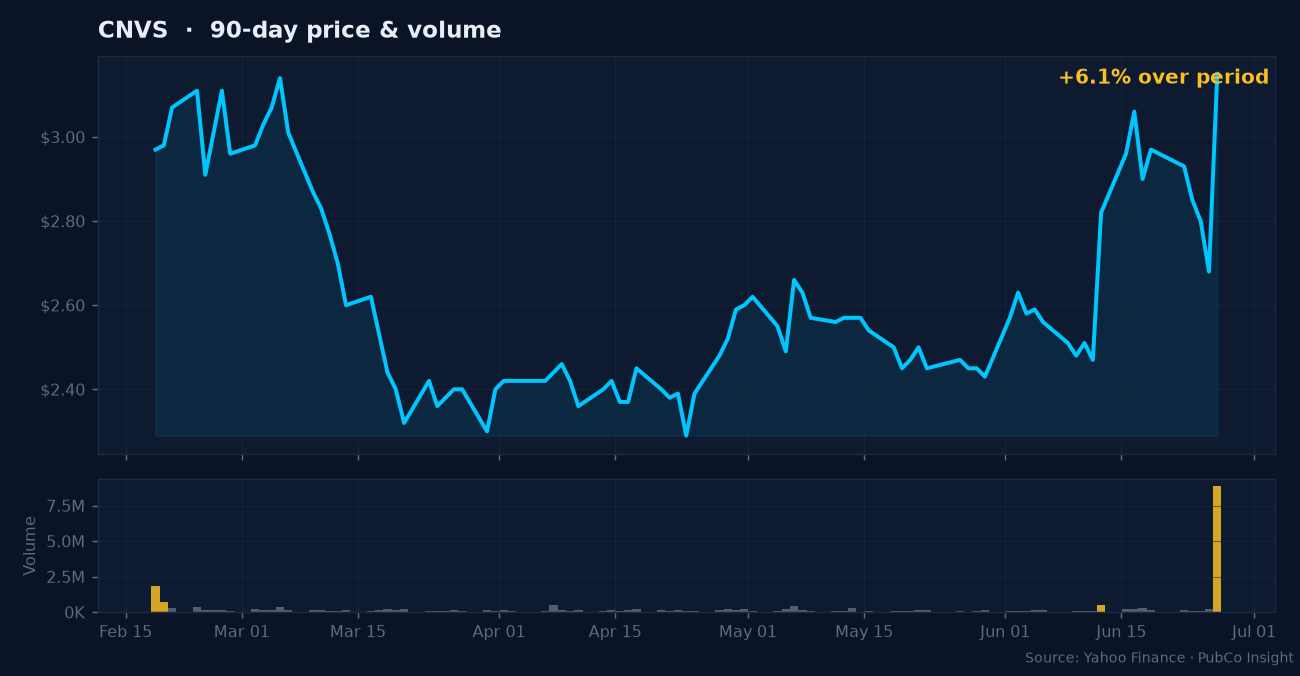
Specifically, the new Convertible Notes are exchangeable for common stock, a common practice that can add shares to the market. This isn't just theoretical; such agreements often come with conversion prices that can create downward pressure on existing share values if the notes are converted at a discount or if the company's stock price declines. The filing details how these notes could translate into additional shares, a dynamic that active investors in micro-cap companies are well-advised to track via PubCo Insight's dilution risk tools.
Further, the 10-Q filed on August 13, 2026, includes a going concern warning. This isn't a minor detail. A going concern qualification from auditors signals substantial doubt about the company's ability to continue as an operational entity for the next twelve months. While not a guarantee of failure, it is a clear red flag that management and the board recognize significant financial challenges ahead. Such warnings are rarely issued lightly and often precede further financing activities, which frequently involve more equity issuance.
The company's financial position, as outlined in its latest quarterly report, supports the auditor's concern. While Cineverse operates in the video tape rental services sector, a look at its balance sheet and cash flow statements is more illuminating than its industry description. The ongoing need for financing, whether through debt or equity, is a recurring theme for companies facing these challenges.
For retail investors, understanding these intertwined risks is crucial. A debt restructuring that defers cash payments but opens the door to dilution, coupled with a going concern warning, paints a picture of a company navigating a tight financial situation. The market capitalization of approximately $50 million against these structural challenges suggests that any significant conversion of debt to equity could have a material impact on per-share value.
Before making any investment decisions, it is prudent to move beyond headlines and read the actual filings. The 8-K describing the debt agreement and the 10-Q with the going concern disclosure contain the specific terms and warnings that define the current risk profile of Cineverse Corp. Knowing what you own means understanding how these agreements can affect your stake.
Primary sources (SEC EDGAR)
8-K 2026-09-17: https://www.sec.gov/Archives/edgar/data/1173204/000119312526394472/cnvs-20260915.htm8-K 2026-09-04: https://www.sec.gov/Archives/edgar/data/1173204/000119312526383714/cnvs-20260831.htm4 2026-08-20: https://www.sec.gov/Archives/edgar/data/1173204/000119312526359706/xslF345X06/ownership.xml144 2026-08-19: https://www.sec.gov/Archives/edgar/data/1173204/000195917326006234/xsl144X01/primary_doc.xmlSCHEDULE 13G/A 2026-08-14: https://www.sec.gov/Archives/edgar/data/1173204/000101359426000919/xslSCHEDULE_13G_X02/primary_doc.xml10-Q 2026-08-13: https://www.sec.gov/Archives/edgar/data/1173204/000119312526349428/cnvs-20260630.htmSee the dilution and promotion flags before you see the pitch.
Each week: the micro and small-caps now showing dilution or paid-promotion signals, with the SEC filing behind every flag. No recommendations, no price targets.