Behind the Telecom Hype: iQSTEL Inc (IQST) Clears the Runway for New Shares
IQST
While OTC-traded telecom company iQSTEL Inc. works to project an image of steady expansion, its recent regulatory filings suggest that the real action is happening behind the scenes in the share registry. A quick look at the company's June 2026 filings reveals a flurry of activity that retail investors should not ignore, highlighted by an S-1 registration statement that went effective on June 2, 2026. This regulatory green light clears the path for potential share issuance, a classic setup for dilution that often catches retail buyers off guard.
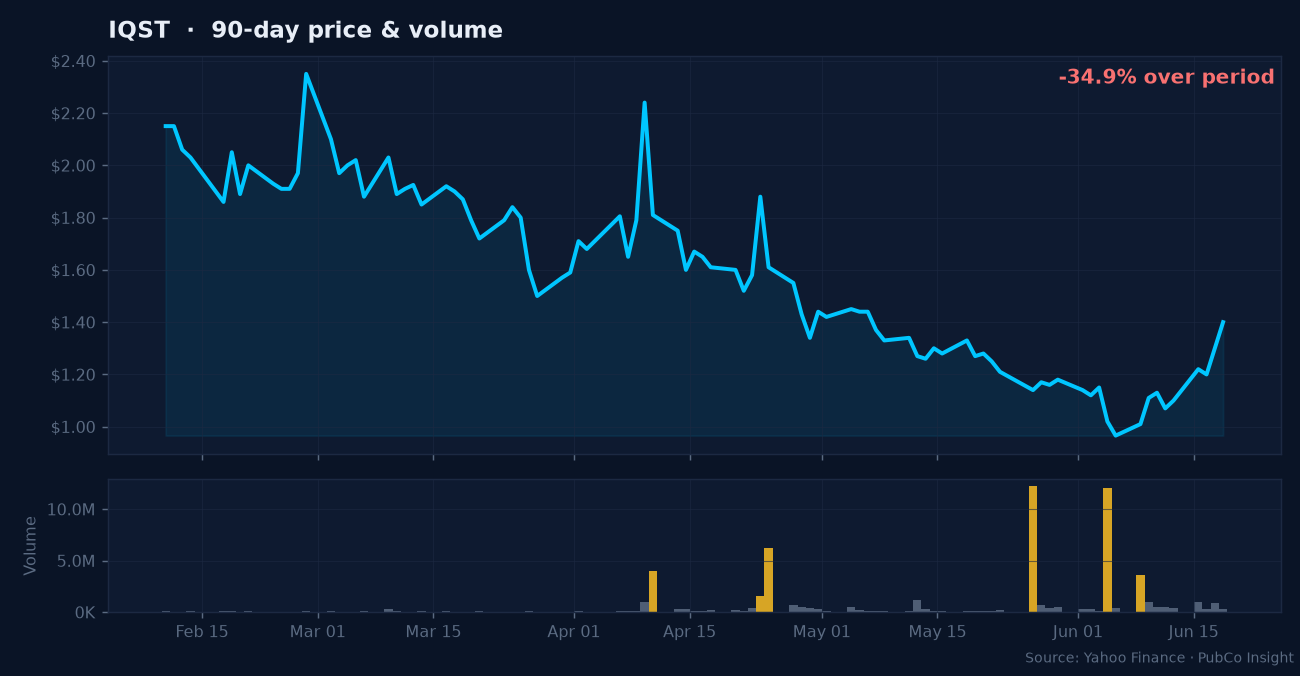
Following closely on the heels of the effective registration, iQSTEL filed an 8-K on June 5, 2026, reporting a new material agreement. While companies often frame these agreements as strategic milestones, the structural reality is that they frequently require funding mechanisms that rely on equity issuance. For a micro-cap company with a market capitalization of under ten million dollars, even modest capital raises can have a disproportionate impact on the existing share count.
The corporate restructuring continued into mid-June. On June 17, 2026, the company filed another 8-K citing items 3.03 and 5.03, which denote material modifications to rights of security holders and amendments to articles of incorporation. When a micro-cap issuer begins altering its corporate charter and security holder rights alongside an active registration statement, it usually points to a capital structure being actively reshaped to accommodate new financing terms or institutional players.
None of this is to say the company cannot execute on its business plan, but the paperwork shows a clear pattern of preparing the field for new equity. For retail investors holding the current outstanding shares, the combination of an active S-1 registration, amended corporate articles, and new material agreements represents a highly specific set of structural risks. Knowing what you own means looking past the press releases and tracking how many new shares are about to enter the market.
Primary sources (SEC EDGAR)
8-K 2026-06-17: https://www.sec.gov/Archives/edgar/data/1527702/000166357726000194/iqst8k061726.htm8-K 2026-06-08: https://www.sec.gov/Archives/edgar/data/1527702/000166357726000185/iqst8k060826.htm8-K 2026-06-05: https://www.sec.gov/Archives/edgar/data/1527702/000166357726000183/iqst8k060426.htmEFFECT 2026-06-02: https://www.sec.gov/Archives/edgar/data/1527702/999999999526001855/xslEFFECTX01/primary_doc.xmlS-1 2026-05-22: https://www.sec.gov/Archives/edgar/data/1527702/000166357726000163/iqst_s1a052126.htm10-Q 2026-05-20: https://www.sec.gov/Archives/edgar/data/1527702/000166357726000154/iqst_10q1033126.htmSee the dilution and promotion flags before you see the pitch.
Each week: the micro and small-caps now showing dilution or paid-promotion signals, with the SEC filing behind every flag. No recommendations, no price targets.