Solid Power, Inc. (SLDP): A Look Under the Hood of Recent Filings
SLDP
Solid Power, Inc. (SLDP) often garners attention for its work in solid-state battery technology, a sector ripe with promise and speculation. However, a look at the company's recent 10-Q filing from November 4, 2026, and the accompanying 8-K from November 3, 2026, which reported earnings, shows a more grounded picture than the headlines might suggest. As always, the filings provide the clearest view of a company's operational reality.
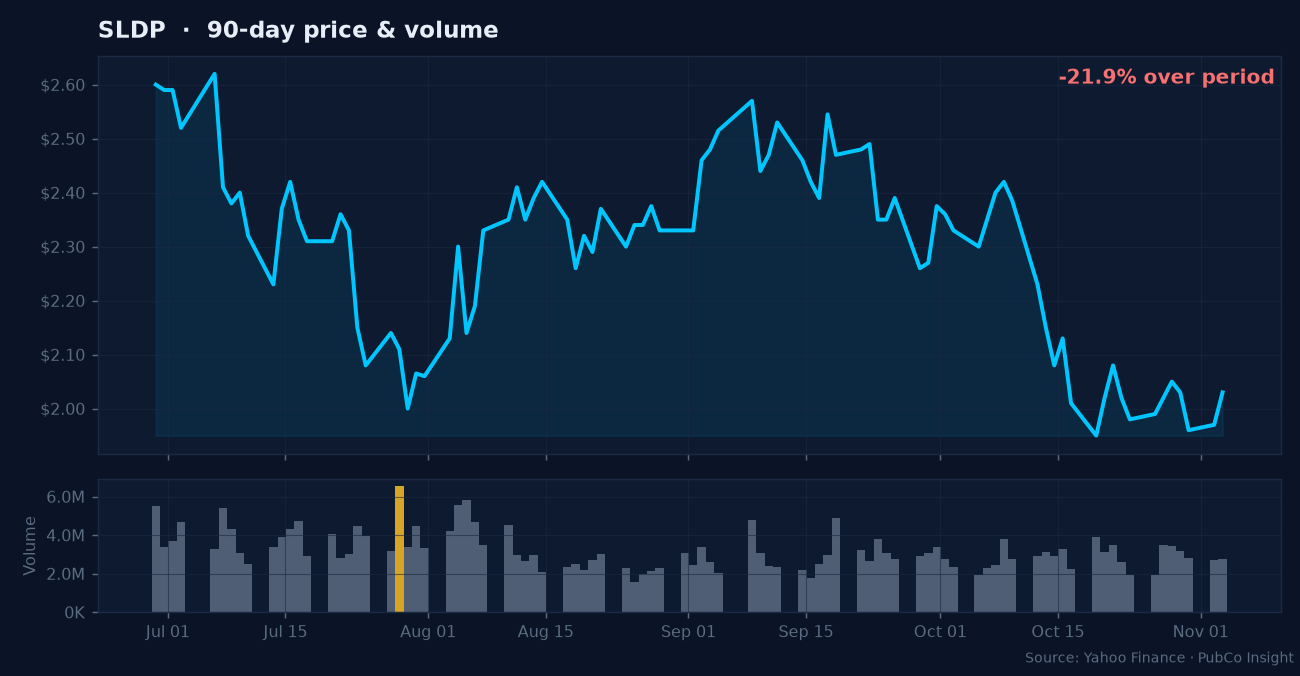
The latest 10-Q, covering the period ending September 30, 2026, is essential reading for anyone tracking SLDP. While the market capitalization of $403 million might seem substantial for a company in its stage, it is important to remember that this valuation is often a forward-looking bet on potential, rather than current profitability. The details within the quarterly report outline the company's financial burn rate and its current cash position, which are critical metrics for early-stage technology firms.
A key takeaway from the 10-Q is the company's continued operational expenditures. Developing advanced battery technology is capital-intensive, and the filings detail the costs associated with research and development, as well as general and administrative expenses. These line items directly impact the company's runway and its need for future capital. While not explicitly signaling immediate dilution, a persistent burn rate in a development-stage company often leads to future financing rounds.
Furthermore, the 8-K filed on November 3, 2026, pertains to the earnings release, which is typically a moment of heightened investor interest. While the content of the earnings itself is not detailed in the filing data provided, the fact that an 8-K was filed for this purpose signals that the company is actively communicating its financial performance. What those communications reveal about progress against milestones, cash flow, and future plans is what truly matters to long-term shareholders.
For investors considering Solid Power, Inc., the message remains consistent: dig into the SEC filings. Understand the company's current financial health, its capital needs, and the specifics of its progress, rather than relying solely on the broader narrative or market sentiment. The 10-Q is not just a regulatory hurdle; it is a direct report on the state of the business, warts and all, and a necessary read for anyone who wants to truly know what they own.